




Zing launched in the UK in January 2024. HSBC announced its closure in January 2025; incoming payments stopped from 2 April 2025 and Zing accounts and cards were closed on 22 May 2025. HSBC subsequently confirmed at its May 2025 AGM that it had integrated Zing's underlying technology platform into HSBC rather than discarding it.
What Happened to HSBC Zing?
HSBC launched Zing in the UK in January 2024 as a standalone international payments service aimed primarily at non-HSBC customers. HSBC announced its closure in January 2025 as part of a wider strategic simplification. Zing stopped accepting incoming payments in April and closed completely on May 22, 2025.
Built to challenge cross-border payment leaders such as Wise and Revolut, Zing offered multi-currency payments, international transfers and a Visa debit card to customers beyond HSBC's traditional banking base. HSBC originally identified four customer groups: international travellers, people sending money abroad to friends and family, professionals working overseas and international investors.
The shutdown quickly became one of the financial industry's most discussed Fintech failures. Financial News reported that around $150 million had been invested in the venture, while subsequent reporting on MP Payments' accounts indicated that HSBC had injected $168.5 million into the business and that it recorded a $87.5 million pre-tax loss in 2024.
But calling Zing simply a $150 million failure misses the more important lesson. HSBC did not discard everything it built. The bank confirmed that Zing's underlying technology platform was integrated into HSBC following the shutdown. The more useful question, therefore, is not whether Zing failed, but why a technically capable product backed by one of the world's largest banks struggled to establish a sustainable position—and what other financial institutions can learn from it.
There is no evidence that one UX problem alone caused Zing's closure. The shutdown resulted from a combination of strategic, organisational, commercial and customer-experience factors. The UX value of the case lies in examining how those factors became visible through the product experience.
HSBC’s Ambitious Leap into Fintech
While Zing’s journey ultimately ended in closure, it is important to acknowledge and commend HSBC for its bold effort in creating a next-generation banking experience. Launching Zing was an ambitious and strategic attempt to address the rapidly evolving demands of a digital-first audience and compete with nimble Fintech disruptors:
1. A Willingness to Innovate
HSBC demonstrated a strong commitment to innovation by investing $150 million in Zing and committing substantial resources to its development. Zing is the result of a more than two-year plan for HSBC to make a mark on Fintech. This move demonstrated the bank’s recognition of the changing financial landscape and its determination to adapt. By creating Zing as a standalone entity, HSBC sought to build a modern, agile Fintech product that could transcend the constraints of traditional banking operations.
2. Building for the Future
Zing was not just an incremental improvement but an ambitious effort to reimagine how international banking could work. From multi-currency accounts to low conversion fees and real-time exchange rates, Zing incorporated advanced features designed to meet the needs of a global, digitally-savvy audience. The decision to structure Zing as a separate entity under an e-money license showed HSBC’s willingness to experiment with innovative models and adapt its regulatory strategies.
3. Technical Excellence
Zing’s 4.8-star rating in app stores is a testament to the technical execution behind the app. Customers recognized the platform’s smooth, intuitive interface and reliable functionality, which reflected a high level of design and engineering quality. These attributes highlight HSBC’s ability to deliver a user-friendly experience in a highly competitive Fintech market.
4. Taking Calculated Risks
HSBC’s effort to create Zing indicates a forward-thinking mindset, taking calculated risks to explore uncharted territories. This willingness to invest heavily in Zing and explore new business models reflects a strategic approach to future-proofing the organization in a rapidly changing financial services industry.
5. Commitment to Customer-Centric Innovation
Zing’s offerings—such as the ability to hold accounts in 20 currencies and its real-time exchange rates—showed HSBC’s genuine effort to meet customer needs for transparency, convenience and global functionality. The launch of Zing aligned with HSBC’s broader strategy to focus on customer-centric innovation, as evidenced by the extensive research and external expertise brought into the project.
UX Analysis: Why Did HSBC Close Zing?
HSBC’s $150 million investment in Zing was intended to deliver a competitive, scalable platform that could quickly capture market share. The app’s offerings, such as holding accounts in 22 currencies and send remittances in 34 currencies, and a Visa debit card with low conversion fees, were comparable to Wise and Revolut.
HSBC said the closure followed a strategic review and formed part of the Group's simplification strategy: concentrating resources on areas where it had a clear competitive advantage and greater opportunities for growth. Reporting around the shutdown also pointed to modest early customer acquisition, compliance-related disruption, internal expansion challenges and changes in HSBC leadership and priorities.
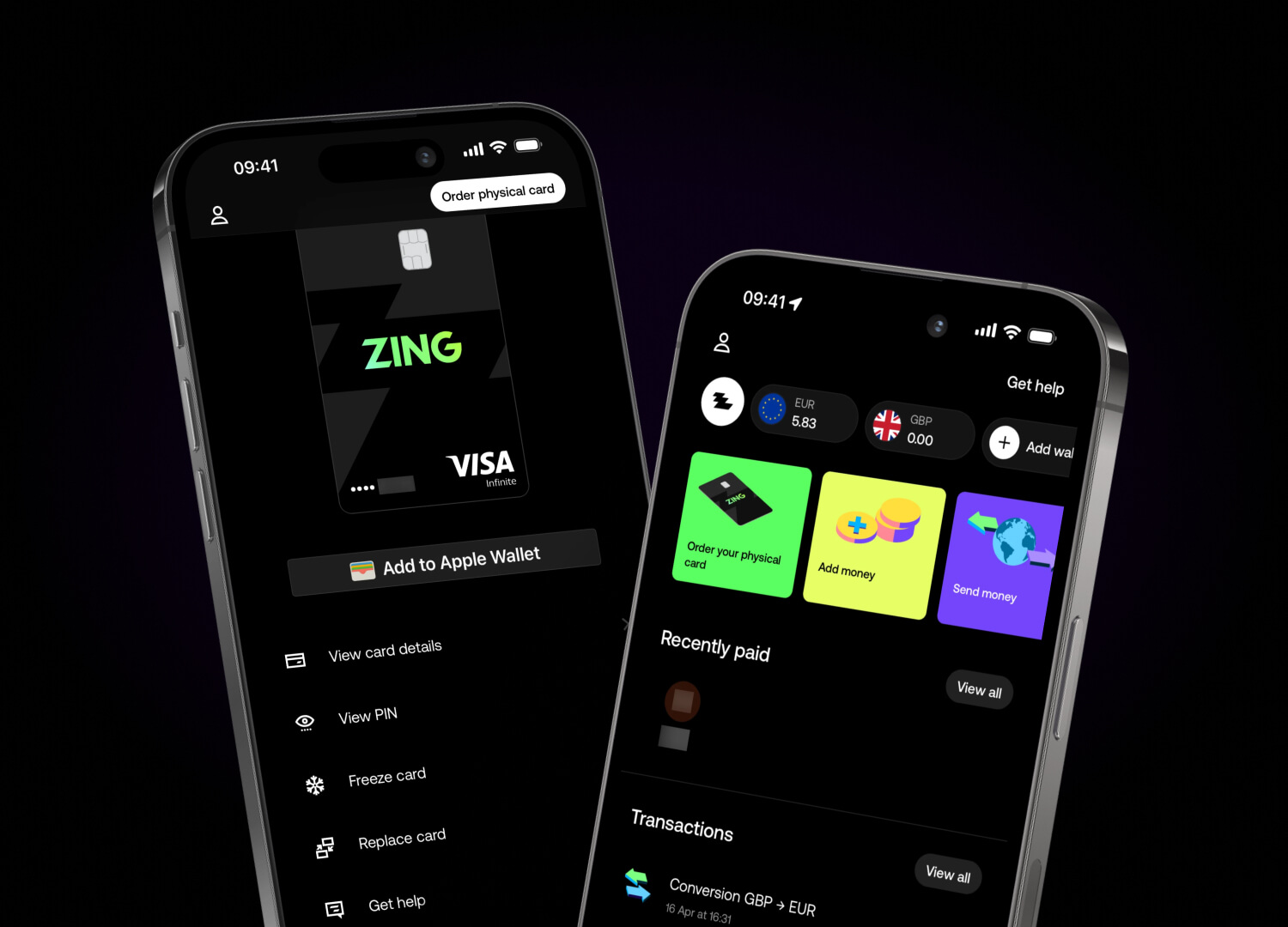
HSBC hoped to gain a foothold in the lucrative cross-border payments sector. In contrast, Zing attracted only 30,000 users within months, compared to 1.1 million monthly downloads for Revolut and 203,000 for Wise, highlighting its inability to meet its ambitious goals.
Why did HSBC's ambitious attempt to disrupt the cross-border Fintech payments market ultimately fail, despite a significant investment and costly technical implementation partnering with Visa’s multi-currency card? Let's analyze the reasons for the collapse of Zing from the perspective of the Financial Digital Experience approach used by UXDA to design next-gen financial products:
1. Zing Lacked a Distinctive Reason to Switch
Zing looked and functioned like a credible Fintech product. The problem was not necessarily that its branding was poor. The strategic problem was that its experience did not communicate a sufficiently distinctive Digital Brand Identity for customers already using Wise, Revolut or another international payments service to change behaviour.
Wise and Revolut are deeply anchored in their missions: Wise fights hidden fees with bold campaigns, while Revolut positions itself as a lifestyle brand, integrating financial tools into aspirational experiences. Zing’s generic messaging, such as “Live your best international life,” failed to evoke emotional connection or trust. It lacked the bold, purpose-driven campaigns that Fintech leaders used to create advocacy and loyalty.
This stands in stark contrast to Wise’s high-impact campaigns (e.g., “Nothing to Hide”) and Revolut’s gamified and community-driven approach. Customers were left wondering what Zing truly stood for, eroding trust and loyalty in the brand.
HSBC anticipated that Zing’s brand would attract non-HSBC customers who were seeking a fresh, innovative financial experience. Instead, Zing failed to connect emotionally with both HSBC’s existing customer base and potential new users, leaving its identity indistinct and its promise unfulfilled.
UXDA defines Digital Brand Identity as the expression of brand strategy through how digital products look, communicate, behave and feel—not just visual branding.
2. Playing Catch-Up Instead of Innovating
Zing fell into the trap of mimicking its competitors without offering innovative, future-forward solutions. UXDA's Digital Experience Branding approach emphasizes the need for differentiation and transformation.
Zing’s approach mirrored Wise and Revolut’s basic features without offering any groundbreaking innovation. Instead of leveraging HSBC’s legacy strengths, Zing attempted to replicate its competitors’ models, including multi-currency accounts, real-time rates and debit cards. However, these features were already perfected by its rivals, leaving Zing as an undistinguished latecomer to the market.
Multi-currency wallets, FX conversion, cards and international transfers were already category expectations. Matching them could make Zing credible, but could not by itself make Zing preferable.
Zing had the opportunity to leverage HSBC’s legacy and expertise in international banking to create unique features, such as seamless integration with HSBC accounts, exclusive perks for HSBC customers or innovative AI-driven financial tools. Instead, the company introduced a product that was a weak copy of Fintech competitors' products, resulting in poor product-market fit.
3. A Broad Target Market Without a Powerful Switching Trigger
Unlike Wise, which targets cost-savvy global citizens, and Revolut, which appeals to tech-savvy millennials with lifestyle features, Zing attempted to attract a broad user base without specific trigger to switch. The main an answered question: why would an international traveller, expat or remittance user leave their existing solution for Zing?
This lack of focus confused HSBC’s existing customers, who saw little incentive to use Zing instead of HSBC’s core services. Furthermore, Wise and Revolut’s customers—already loyal to those platforms—had no reason to switch to a latecomer like Zing, especially one with higher fees and slower services.
Neobanks like Revolut thrive on community engagement and viral marketing. Zing neglected this critical principle. Features such as referral bonuses, user communities and gamified engagement were poorly executed in its offerings. In contrast, Wise and Revolut continuously build user advocacy through features that encourage sharing and collaboration, such as peer-to-peer payment tools and financial tracking, which foster a sense of community.
4. Good Usability Was Not Enough to Create Preference
HSBC itself reported ratings of 4.8 on Google and 4.5 on Apple in June 2024. That makes Zing a useful demonstration that a well-rated interface can still fail to build a sustainable business position.
Usability removes friction. Emotional engagement, personalization and distinctive behavior can create preference. But neither substitutes for product-market fit. Zing’s interface, while functional, failed to deliver a valuable brand promise to differentiate itself from competitors like Wise and Revolut.
Instead of creating excitement through vibrant visuals, gamification, Dopamine Banking and community-driven engagement, Zing delivered a purely functional experience that felt uninspired. The absence of adaptive interfaces and personalized financial insights further eroded its appeal, leaving users without the tailored, rewarding experiences they expect from modern Fintech apps.
Additionally, Zing missed opportunities to create "lovable things" that exceed customer expectations. Without a strong narrative or emotional connection, Zing struggled to resonate with its audience. While its technical execution was solid, Zing’s failure to provide a cohesive, dopamine-fueled user journey led to disengaged customers and an obscure brand, ultimately making it indistinguishable in a market dominated by emotionally intelligent Fintech disruptors.
5. Operational and Experience Failures
Zing was marred by operational inefficiencies and poor customer service, which eroded trust and drove negative reviews:
- Delayed account approvals: Many users complained that their applications were stuck in a prolonged review process, with some waiting weeks to months for approval, even if they were existing HSBC customers. GlobalData highlighted the need for existing HSBC customers to undergo re-KYC as unnecessary friction.
- Blocked transactions without clear explanations: Complaints surfaced about money being held or returned without proper communication. Customers reported being asked for additional documentation but receiving inconsistent responses from support.
- Slow transfers: Zing’s promise of instant transactions was contradicted by reports of delays spanning 1-2 business days, even for Zing-to-Zing transfers.
- High fees: Despite marketing claims of competitive fees, intermediary bank charges eroded cost effectiveness, with one customer citing a 9% fee deduction on international transfers.
These complaints painted a picture of a service riddled with technical and procedural inefficiencies, undermining user confidence and loyalty. In contrast, Wise and Revolut provided seamless, predictable experiences that fulfilled their brand promises. The app’s poor user feedback reflected a stark gap between its promise and delivery:
- Sign-up issues: Many users were locked out of the app due to complex identity verification requirements.
- Customer service failures: Without direct support channels or clear resolutions, users were left frustrated and distrustful.
- False starts with transfers: Zing’s inability to meet promised transfer timelines disappointed customers who relied on speed and efficiency.
These issues directly contradicted the core principles of customer-centered financial experience.
6. Strategic Misalignment
Traditional banks like HSBC often struggle with aligning disruptive innovations with their core operations. But an innovation venture also must remain aligned with the institution's operating model, strategic priorities, risk structure and governance.
Zing’s struggles with compliance restructuring highlighted the challenges of embedding innovation within a legacy organization. HSBC’s complex compliance requirements delayed international expansion and stifled the app’s ability to scale quickly. Additionally, the organizational silos within HSBC likely slowed decision-making and innovation compared to the agile structures of Fintechs.
UXDA's Digital Experience Branding approach highlights that startups and neobanks benefit from their lean, risk-taking structures, enabling them to innovate rapidly and pivot based on user feedback. Zing’s slow processes—evident from customer complaints about delayed registrations and blocked accounts—exemplify how HSBC’s legacy systems undermined Zing’s ability to compete in a fast-paced market.
7. Awareness and Acquisition Did Not Translate Into Sustainable Scale
Zing's failure highlights the critical importance of a strong launch strategy with robust product QA, testing and feedback mechanisms during the pre-launch, launch and post-launch phases. While the app boasted technical excellence, user reviews revealed numerous operational and technical shortcomings, such as prolonged registration times, delayed transactions and inconsistent customer support. These issues could have been mitigated through comprehensive testing and iterative improvement processes before scaling to a wider audience.
FXC Intelligence found that Zing performed relatively strongly on social media, particularly TikTok. Global best practices suggest starting with a controlled rollout to small, diverse user groups, enabling teams to identify and resolve technical and usability issues early. Zing lacked a well-structured feedback loop to collect and act on user insights systematically, a hallmark of successful Fintech products.
By failing to prioritize ongoing product improvements based on real-world user data and feedback, Zing missed the opportunity to refine its offering and align with customer expectations. Without this iterative process, even a technically sound product risked disappointing users at critical touchpoints, ultimately jeopardizing trust and loyalty.
What Banks Can Learn From the HSBC Zing Shutdown
The product itself closed, but its technology did not disappear. At HSBC's May 2025 AGM, the bank confirmed that Zing's underlying technology had been integrated into HSBC. HSBC continues to operate its Global Money proposition in 2026, although HSBC's public materials do not establish that any particular current Global Money feature came specifically from Zing.
Zing demonstrates that Fintech-quality UI is no longer enough to create Fintech-level growth. Zing’s failure underscores the importance of moving beyond UI to create a distinctive, purpose-driven product. For traditional banks like HSBC to succeed in the Fintech arena, they must:
- Build a Distinctive Digital Brand Identity: Develop a clear, purpose-driven, emotionally resonant digital brand identity and narrative that differentiates your digital experience from competitors to build trust and loyalty.
- Operational Excellence Matters: Customers expect Fintech-grade efficiency, speed and reliability, which legacy institutions must replicate to compete in the marketplace.
- Leverage Existing Strengths: Integrate new products with core banking services to create unique value.
- Innovate, Don’t Imitate: Success comes from creating value in new ways, not from duplicating existing features. Use cutting-edge technology and user-centered design to create features that exceed expectations.
- Focus on Community and Advocacy: Increase user engagement through gamification, rewards and social community features.
- Embed Emotional Design Principles: Transform mundane financial tasks into delightful interactions to keep users engaged.
- Align Vision and Execution: Banks must reconcile their innovation goals with the constraints of legacy systems and internal politics.
Zing’s failure highlights the pitfalls of chasing Fintech disruptors. It serves as a cautionary tale: traditional banks must rethink their approach to Fintech, not by copying disruptors, but by reimagining how they deliver value in a digital-first world.
Final Thought
While Zing ultimately didn’t achieve its intended success, HSBC’s initiative highlights the importance of traditional banks embracing change. The lessons learned from Zing’s journey will undoubtedly inform future projects, allowing HSBC to refine its approach to innovation and better align with customer expectations.
HSBC had capital, technology, global expertise and a credible digital product. What Zing struggled to establish was a compelling reason for customers to change existing behavior at sufficient scale.
For banks, that is the larger lesson. Digital development cannot stop at launching another app with category-standard features and polished UX. Successful financial products need a distinctive value proposition, a recognizable Digital Brand Identity, operational excellence and an organizational system capable of continuously protecting and improving the customer experience.
And Zing's story did not end when the app closed. HSBC retained and integrated its underlying technology. The $150M question is therefore not only whether the standalone product succeeded, but how much reusable capability the institution gained from the experiment.
However, this attempt was a commendable leap forward, showcasing HSBC’s vision to compete in a space traditionally dominated by nimble, tech-first startups. Zing’s legacy should not be seen solely as a failure, but as a stepping stone in HSBC’s journey to redefine its role in a rapidly evolving Fintech landscape.
Innovation should not be judged only by whether the original brand survives. A venture can fail commercially while still generating technology, research, capabilities and institutional knowledge that strengthen the parent organization.
By continuing to invest in bold, customer-focused innovation, HSBC can leverage digital experiences to lead the charge in creating banking solutions that resonate with the next generation of users.
HSBC Zing: Key Questions
What was Zing by HSBC?
Zing was a multi-currency payments and international money transfer app launched by HSBC Group in the UK in January 2024. It allowed customers to hold 22 currencies, send money in 34 currencies and use a Visa debit card for international spending. Unlike HSBC’s traditional banking products, Zing was designed for the open market and could be used without being an HSBC bank customer.
Was Zing a bank?
No, Zing was not a bank. The service was provided by MP Payments UK Limited, an HSBC Group company authorised by the UK Financial Conduct Authority as an electronic money institution. This meant money held with Zing was electronic money rather than a bank deposit and was not protected by the UK Financial Services Compensation Scheme.
Who owned Zing?
Zing was owned by HSBC Group and operated through MP Payments. HSBC’s corporate filings show MP Payments Group Limited and MP Payments UK Limited as wholly owned subsidiaries of the Group. Zing was developed as a standalone Fintech proposition while remaining part of HSBC’s broader payments strategy.
Why did HSBC close Zing?
HSBC closed Zing following a strategic review as part of its wider effort to simplify the Group and focus investment on businesses where it saw stronger competitive advantages and growth opportunities. Zing had also faced the challenge of scaling against established international payment providers. HSBC has not attributed the closure to any single UX or product issue.
When did Zing shut down?
Zing officially shut down on May 22, 2025, around 16 months after its UK launch. Customers could continue using the service normally until April 2, 2025, after which incoming payments and account top-ups stopped. Zing accounts, cards and app access were then closed on May 22.
How much did HSBC invest in Zing?
HSBC’s investment in Zing has commonly been reported at around $150 million. Financial News reported a $150 million investment when the closure was announced, while later accounts for the business indicated that HSBC had injected approximately $168.5 million into the venture. The difference reflects how investment in the business is measured across different reporting periods and sources.
What happened to Zing's technology after it closed?
HSBC retained and integrated Zing’s underlying technology platform rather than abandoning it when the app closed. At HSBC’s 2025 Annual General Meeting, the bank confirmed that the technology had been integrated into HSBC as part of its wider simplification strategy. This means Zing’s standalone brand disappeared, but some of the technological capability created for it remained within the Group.
Why did Zing struggle to compete with Wise and Revolut?
Zing entered an international payments market where established players such as Wise and Revolut already had strong customer bases, recognizable brands and mature cross-border propositions. Zing offered competitive multi-currency functionality, but matching category-standard features did not automatically create a strong reason for customers to switch. Its challenge combined customer acquisition, differentiation, operational friction and HSBC’s changing strategic priorities rather than one isolated UX failure.
What UX lessons can banks learn from Zing?
The Zing case shows that strong UI and useful features alone do not guarantee digital product success. Banks need a clear customer problem to solve, a compelling reason to switch, distinctive digital brand identity, frictionless onboarding and reliable operational execution. UX also has to remain connected to business strategy and organizational governance so that customer experience, technology and commercial priorities evolve as one system.
Get UXDA Research-Based White Paper "How to Win the Hearts of Digital Customers":
If you want to create next-gen financial products to receive an exceptional competitive advantage in the digital age, contact us! With the power of financial UX design, we can help you turn your business into a beloved financial brand with a strong emotional connection with your clients, resulting in success, demand, and long-term customer loyalty.
- E-mail us at info@theuxda.com
- Chat with us in Whatsapp
- Send a direct message to UXDA's CEO Alex Kreger on Linkedin