
User-Centered Design in Banking: Turning Customer Needs Into Better Financial Experiences
User-centered design in banking provides a strategic approach that places real customer needs, behaviors, goals and limitations at the center of product, service and experience decisions. It helps financial institutions move beyond internal assumptions and organizational silos by designing digital banking around how customers actually think, decide and manage their financial lives. The definition of User Centered Design (UCD) or Human Centered Design (HCD) is: a methodology of creating products or services that provide solutions based on the human or user perspective in a problem-solving process. The term, "user centered design" was first introduced by Donald A. Norman in his 1986 book, User Centered System Design: New Perspectives on Human-computer Interaction.
What Is User-Centered Design in Banking?
User-centered design in banking is a methodology for creating financial products and services from the customer perspective, using research, behavioral understanding, iterative design and validation to solve meaningful problems rather than simply digitizing existing banking processes.
What Is the Difference Between User-Centered Design and Human-Centered Design?
User-Centered Design (UCD) focuses specifically on the needs and behaviors of people using a product or service, while Human-Centered Design (HCD) is a broader concept that considers people and their wider social, emotional and environmental context, although the terms are often used interchangeably in financial UX.
What Is the User-Centered Design Process in Banking?
The UCD process typically includes understanding the user context, identifying requirements, designing solutions and testing results, ensuring that customer expectations influence both the creation and validation of financial products from the beginning.
Why Is Customer Research Important in User-Centered Design?
Research helps banks understand not only what customers do but why they behave that way, where they struggle, what creates uncertainty and which outcomes matter most, allowing teams to prioritize the right problems before defining solutions.
What Methods Are Used in User-Centered Design?
Common UCD methods include customer interviews, user personas, scenarios, use cases, journey mapping, behavioral research, usability testing and prototyping, helping teams understand customer context and continuously validate design decisions.
What Are the Main Principles of User-Centered Design?
Core UCD principles include deep understanding of users and context, customer participation, iterative design, user validation, holistic experience thinking and multidisciplinary collaboration, ensuring that solutions evolve through evidence rather than assumptions.
How Does User-Centered Design Improve Banking UX?
User-centered design helps banks create simpler journeys, clearer interactions, more relevant services and greater accessibility across onboarding, payments, lending, savings, investments and support, improving usability while reducing friction and uncertainty.
How Can Banks Scale User-Centered Design Across the Organization?
At enterprise scale, customer insight must influence business priorities, technology decisions, product architecture, service processes and UX governance, ensuring that customer-centered thinking becomes an organizational capability rather than remaining isolated within individual product teams.
What Business Value Does User-Centered Design Create?
Combined with Strategic UX, Financial UX and UX governance, user-centered design can improve digital adoption, customer satisfaction, usability, trust and competitive advantage by continuously translating customer understanding into better experience and business decisions.
Explore UXDA insights on user-centered design in banking, Human-Centered Design, customer-centered design, banking UX, financial UX, customer research, usability, customer journey design, Strategic UX and UX governance.



UX Design Review: What GCash Said About UXDA
This is a Clutch review recap of the GInvest investment experience UXDA designed for the Philippine largest e-wallet GCash.
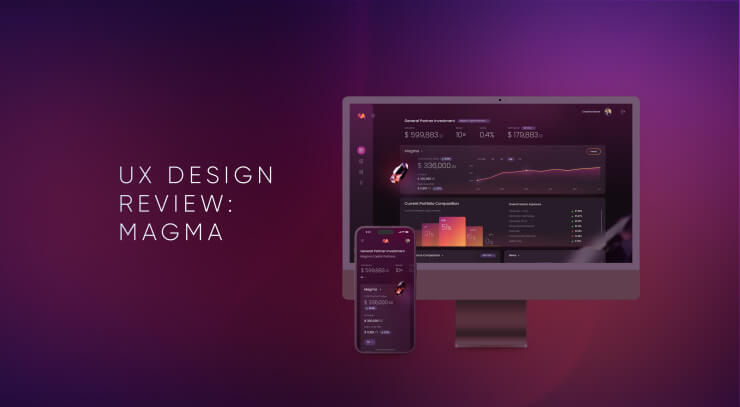
UX Design Review: What Magma Said About UXDA
This is a Clutch review recap of the user experience UXDA designed for an exceptional finance platform - the hedge fund Magma.

10 Signs Your Banking App Urgently Needs a UX Redesign
It is vital for financial product success to deliver according to customers’ needs and wants. How is your banking doing at tackling the challenges of the experience age?

Overcoming Mental Blocks in Financial Product Design
When designing an exceptional user experience for innovative banking products, you must be ready to break the rules.
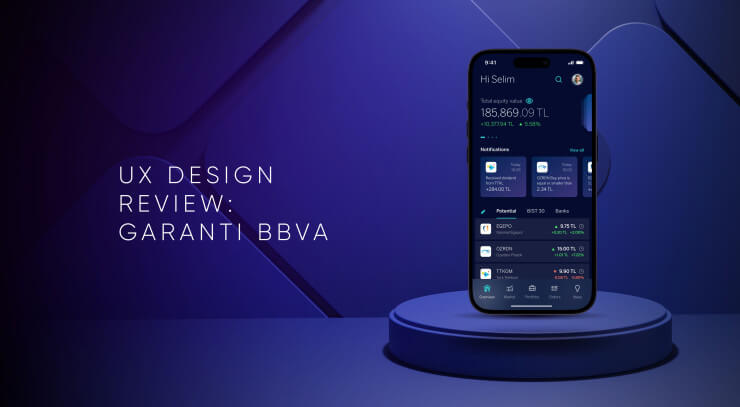
UX Design Review: What Garanti BBVA Said About UXDA
This is a review collected by Clutch, given by Tevfik Kardelen, the Unit Manager of Garanti BBVA Securities responsible of Digital Channels and Marketing.




Why Customer Journeys Matter More Than Banking App Screens Design
Our key UX architects answering why the User Journey Map sometimes works magic, and how it benefits financial companies.

UX Design Review: What Private Wealth Systems Said About UXDA
This is a Clutch review recap of the wealth management platform for UHNWI experience UXDA designed for the Private Wealth Systems.

What The Banking World Can Learn From The TERRA Tragedy
The sudden crash of the Terra coins Luna and UST has proven to be a very painful lesson for the financial world. People need trustworthy financial services that are stable and won't make people lose their entire life savings in 24 hours.

Five Best Practices for UX Research in Financial Services
There are dozens of research methods available, but from our experience to create a user-centered financial product, five key research methods should be highlighted.

UXDA Wins Platinum At The Summit International Awards
UXDA started 2022 as a Platinum winner in the Financial Marketing category of the Summit International Awards.

Financial UX Design Is About Saving People's Lives
Most people can remember a situation in their lives when they experienced a huge amount of stress when dealing with money. A user-centered financial UX should help cope with such struggles and even save lives in order to avoid tragedies like the suicide of Alexander Kearns.


