
Fintech vs Banks: How Digital Experience Is Reshaping Financial Competition
Fintech vs banks is no longer simply a competition between startups and traditional financial institutions—it is a competition between different models of creating customer value. Fintech companies often compete through speed, focus and digital-first experiences, while banks bring scale, trust, capital, regulation, data and broader financial ecosystems.
What Is the Difference Between Fintech Companies and Traditional Banks?
Fintech companies typically focus on specific customer problems, faster product development and digital-first delivery, while banks operate across broader financial relationships with advantages in trust, regulation, distribution, capital and product depth.
Why Have Fintech Companies Outperformed Banks in Digital Experience?
Fintech companies often outperform traditional banks when they can focus deeply on one customer problem, simplify complex services and make faster product decisions, enabling shorter journeys, clearer value propositions and faster experimentation.
What Competitive Advantages Do Banks Have Over Fintechs?
Banks have structural advantages in trust, scale, customer data, distribution and broad financial relationships, which become especially powerful when everyday banking, lending, payments, wealth and AI are connected into one coherent digital ecosystem.
Are Fintechs and Banks Becoming More Similar?
The gap is narrowing as banks adopt fintech-style digital experiences and fintech companies expand into broader financial services, while payments, cards, investments, lending, personalization and AI capabilities increasingly become standard across both models.
Why Are Features Becoming Less Important for Differentiation?
As financial functionality becomes easier to replicate, features, technologies and even AI capabilities increasingly become commodities, shifting competitive advantage toward customer experience, brand, trust and the organization’s ability to execute coherently.
How Can Banks Compete With Fintech Companies?
Banks can compete by combining their existing strengths with fintech-like simplicity, speed and customer-centered experience quality, turning broad financial capabilities into one coherent relationship rather than a collection of disconnected products.
How Can Fintech Companies Build Sustainable Competitive Advantage?
As fintechs mature, they need to move beyond individual features by strengthening trust, Digital Brand Identity, broader ecosystems, customer relationships and experience coherence, making their value harder for competitors to replicate.
What Is the Future of Fintech vs Banks?
The future is less about fintech replacing banks and more about both competing to become the most relevant, trusted and valuable financial relationship by connecting technology, products, customer understanding and Digital Brand Identity into a coherent financial ecosystem.
Explore UXDA insights on fintech vs banks, fintech vs banking, traditional banks, digital banks, neobanks, banking UX, fintech UX, Digital Brand Identity, digital transformation and the future of financial services.


Applying Neuromarketing to Digital Banking Apps and Fintech Design
Despite a decade of digital innovation, financial services often remain cold and overwhelming. At UXDA, we use neuroscience and neuromarketing to transform emotion into engagement. Discover how neuromarketing transforms digital banking by addressing emotional barriers, building trust, and creating empowering user experiences.




Financial UX Design for Complex Products: Why Specialization Matters
The world of financial services is a labyrinth of complexity, regulations and high stakes. Despite the allure of high-profile projects and substantial budgets, even the most skilled designers often hesitate to delve into this demanding sector. The primary reason?
2022 UXDA Recap: Top Stories, New Awards, Amazing Clients
In 2022 financial UX design agency UXDA delivered many financial products with customer-centered UX. Explore these insights collected by UXDA experts in 2022.
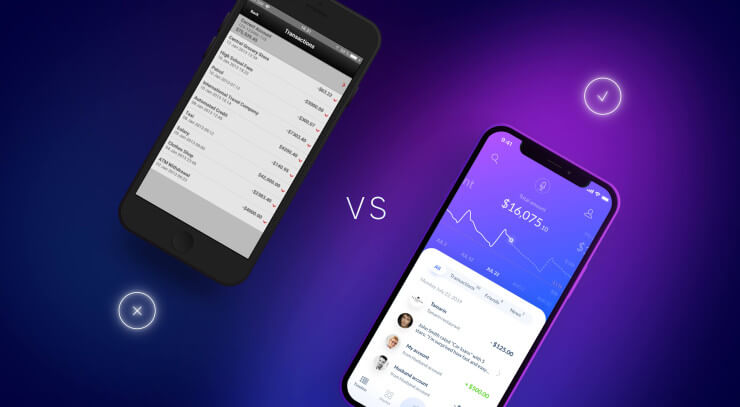
Fintech App Design: 20 UX Problems and Best Practices for Banking Apps
Is it possible to improve the customer experience of a financial app in just a few days? Check out our guide with 20 examples that demonstrate how you can skyrocket the user experience of mobile banking solutions using the power of financial UX design.
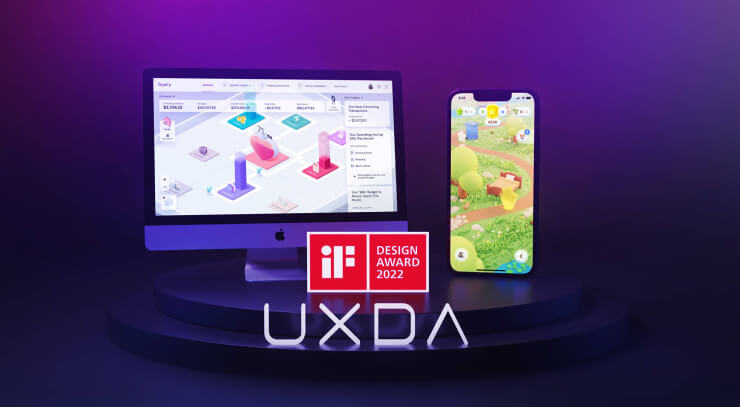

Two iF Design Awards 2022 Makes UXDA the Most Awarded Fintech UX Design Agency
UXDA wins two iF Design Awards 2022 with Goalry and Kids Banking App
UXDA Becomes The Benzinga Global Fintech Awards Listmaker As The Best Financial Research Company
We are very happy to announce that UXDA has become a Benzinga Global Fintech Awards Listmaker as the Best Financial Research Company.
Fintech Disruption in Banking: 10 UX Lessons for Digital Strategy
10 digital Fintech design trends that reveal the approach of disrupting the banking business. Check out your ability to integrate user-centricity at all levels of the company.
Fintech Disruption In the Banking Industry is Driven by UX Design
Statistics on how and why Fintech use design to disrupt banking industry. What can we learn from it to gain success?
UXDA Is One Of The Leading FinTech Companies In German-Baltic Business Awards
UXDA has been recognized as one of the leading FinTech companies in the German-Baltic Chamber of Commerce (AHK) Awards 2019!
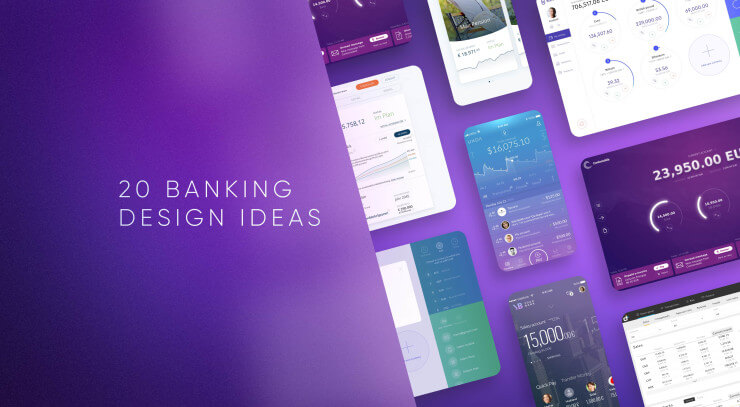
Financial Dashboard Design: 20 Banking and Fintech UI Examples
There are so many beautiful visualizations of banking interfaces on Dribble and Pinterest. Unfortunately, if you look closer, quite often they are meaningless from the user experience perspective. Many of them are just beautiful animations that ...


