
Future of Banking: AI, Autonomous Finance and the Next Era of Customer Experience
The future of banking is being shaped by AI, autonomous finance, digital ecosystems, changing customer expectations and the shift from feature-based competition toward experience-based differentiation. As financial capabilities become easier to replicate, banks will increasingly compete through how intelligently they connect technology, brand, customer needs and trust into one coherent financial relationship.
What Is Shaping the Future of Banking?
The future of banking is being shaped by AI, agentic banking, autonomous finance, open finance, embedded finance, personalization and digital ecosystems, all of which are changing how financial institutions deliver services, make decisions and create customer value.
How Will AI Change the Future of Banking?
AI will make banking increasingly proactive, contextual and outcome-driven by helping financial institutions understand customer intent, automate complex tasks, provide personalized financial guidance and coordinate decisions across multiple products and services.
What Role Will Agentic and Autonomous Banking Play?
Agentic and autonomous banking will allow AI-powered systems to plan and execute financial tasks within defined permissions, shifting customers from manually navigating features toward expressing goals, supervising decisions and approving outcomes.
Why Is Banking Moving From Digital Transformation to Experience Transformation?
Digital transformation created new capabilities, but the next competitive challenge is to orchestrate those capabilities into a coherent, distinctive and valuable customer experience, ensuring that new products, channels and AI systems strengthen the overall relationship instead of adding fragmentation.
Why Will Customer Experience Become More Important for Competitive Advantage?
As features, platforms and AI capabilities become increasingly accessible, customer experience, trust, brand and organizational execution become harder to replicate, shifting differentiation from what technology a bank has toward how meaningfully customers experience its value.
How Will UX Change as Banking Becomes More Intelligent?
As banking becomes more intelligent, UX becomes more strategic—not less, because banks must design how AI behaves, communicates, explains decisions, asks permission, expresses the brand and returns control to customers across increasingly autonomous financial experiences.
What Role Will Digital Brand Identity Play in Future Banking?
A distinctive Digital Brand Identity will help banks remain recognizable as interfaces become more adaptive and conversational by ensuring that visual language, communication, interactions, AI behavior and service experience consistently express one coherent financial brand.
Why Do Banks Need UX Governance and Bank-as-a-Product?
Strategic UX, UX governance and a Bank-as-a-Product mindset help financial institutions evolve products, channels, technologies and AI capabilities as one connected experience, preventing continuous innovation from creating fragmentation and Experience Debt.
What Will Define Competitive Advantage in the Future of Banking?
The defining challenge will not be access to technology but the ability to translate increasingly commoditized capabilities into a distinctive, coherent and trusted customer experience that strengthens adoption, loyalty, customer value and sustainable growth.
Explore UXDA insights on future of banking, banking trends, AI in banking, agentic banking, autonomous banking, autonomous finance, Digital Brand Identity, banking UX, UX governance, Bank-as-a-Product and future customer experience.




AI in Banking 2026: 21 Real-World Case Studies and Use Cases
Explore the latest real-world AI implementations in banking and discover how leading financial institutions are moving beyond experimentation to transform digital customer experience. From hyper-personalization and proactive financial guidance to intelligent self-service and agentic banking.
AI Implementation in Banking: How UX Research Can Prevent Scaling Bad UX
AI can accelerate digital banking transformation—but it can also scale the wrong assumptions. This article explores how structural blind spots and misdiagnosed customer problems lead banks to optimize broken experiences, automate friction, and compound strategic risk—and why an independent UX perspective is essential before AI turns flawed thinking into infrastructure.
AI in Financial UX Design: It Will Expose Weak Digital Banking Strategy
AI won’t kill UX in finance — it will expose where UX was never truly strategic. This article explores why AI-generated interfaces can help banks build faster, but not necessarily smarter, and why real competitive advantage will come from customer understanding, strategic judgment and UX governance.
Agentic Banking: What Is the Biggest Risk of Autonomous Financial Agents
Agentic AI is making banking faster and smarter—but when millions of autonomous agents optimize toward the same goals, efficiency can turn into systemic risk. This article explores how synchronized AI decisions could trigger the next financial crisis, and why financial UX must evolve from frictionless execution to resilience, diversity, and smart friction.
Systemic UX in Banking: Beyond Traditional UX Design for Financial Services
Traditional UX in finance focuses on cleaner interfaces and smoother flows — but that’s not enough for high-stakes financial decisions. This article explores how Systemic UX shifts the focus to decision architecture, trust and resilience across the full customer lifecycle, helping banks reduce churn and build lasting loyalty in an increasingly skeptical market.
Global Digital Banking: Strategic Implications for Banks and Financial Leaders
In this article, we explore how Fintech-driven banking globalization mirrors the media industry’s transformation, what obstacles and opportunities arise when financial services become borderless and how artificial intelligence (AI) is poised to change the game even further.


7 Digital Banking Trends of 2026 Redefining Customer Experience
In a world in which anyone can download a banking app, just being digital is no longer a differentiator. The real challenge now is building a brand's digital experience that goes beyond basic functionality—an experience that bridges the financial brand with customers’ values, emotions and long-term aspirations.
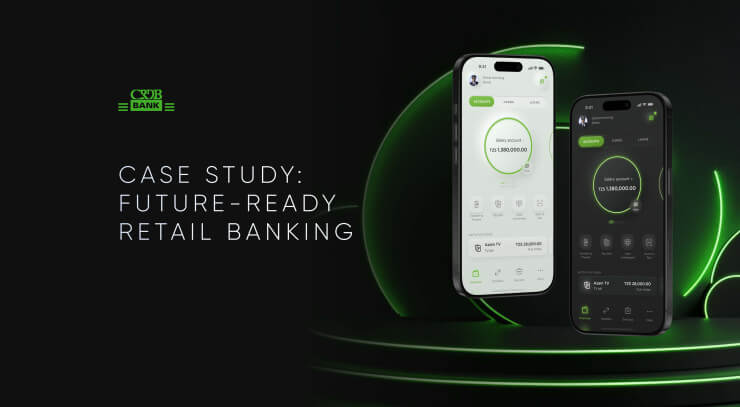



CRDB Case Study: Moving from Standard Digital Banking to a Future-Focused Brand in Africa
CRDB Bank, a leading financial institution in Tanzania, recognized the need to transform its outdated mobile app into a cutting-edge solution for the future. By partnering with UXDA, CRDB not only modernized its app but also reinforced its reputation as the bank of tomorrow.
On-Device vs Cloud AI and the Future of Personalized Banking UX
Integrating AI into banking services will obviously revolutionize the user experience in financial services, offering real-time advice and 24/7 transaction monitoring. The main question is which AI will serve banking first ─ on-device AI or cloud-based AI? Let’s compare!
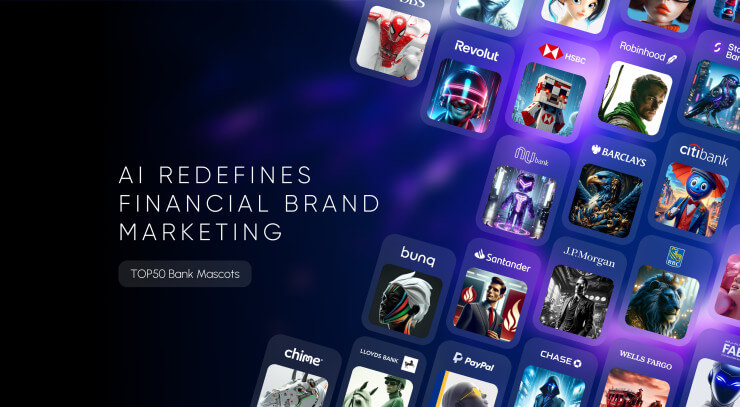



AI in Financial Social Media: How Banks Can Personify Brand Communication
There is another promising area of AI use for financial brands ─ marketing and brand communication. The UXDA team assessed the potential of humanizing financial brands using ChatGPT and Midjourney by creating digital mascots based on the mobile service interface.
- 1
- …
- 3


