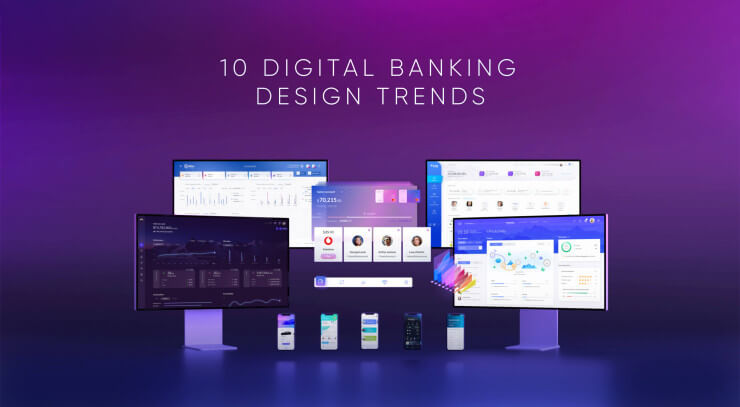



What does distinctive financial app UI design look like in practice? This collection brings together 10 banking and fintech UI design solutions created by UXDA for real financial products—from everyday banking and investment platforms to financial super apps, digital wallets, emerging AI and spatial experiences. Together, they demonstrate how strategic UX can translate a financial brand into a recognizable digital identity while creating clarity, consistency and differentiation across complex financial ecosystems.
10 Finance App UI Design Examples From Banking and Fintech
Financial interfaces are no longer simply functional touchpoints. For banks and fintechs, they are increasingly where customers experience the brand, build trust and form their perception of the entire financial institution.
After spending decades building trust and millions building the brand, financial institutions cannot afford to let generic digital experiences erase that value. Their digital products should strengthen recognition, reinforce trust and make the brand unmistakably theirs.
The challenge is to translate business strategy, brand identity and complex financial functionality into a digital experience that feels coherent, intuitive and connected to the brand—across products, journeys, channels and evolving customer needs. The following examples show how this challenge can be approached across mobile banking, investing, dashboards, digital wallets and connected financial platforms.
Each experience has been designed around the specific business ambitions, customer needs, market context and brand character of the financial institution behind it. Rather than treating UI as a visual layer applied at the end of the process, UXDA connects strategy, UX architecture, digital brand identity and experience governance into one coherent system.
It is not simply a collection of visually different financial interfaces. It is a look at how distinctive digital brand identity can become a strategic asset—helping financial brands create recognizable experiences, differentiate in highly competitive digital markets and govern that experience consistently at scale.
Each design has been tailor-made by UXDA for the client's specific goals, using the unique financial design methodology––a UX design strategy that's customized to fit the complexity and specifics of financial services.
Explore the financial app UI designs below for inspiration on how UXDA moves banking and financial services beyond generic digital experiences toward products that are both highly functional and distinctive.
1. Retail Banking App UX/UI: Unifying Everyday Banking in One Experience
A full-service banking app has to bring a broad financial ecosystem together without overwhelming customers. For Emirates NBD, the experience consolidates previously fragmented services into one cohesive mobile journey, with a clear financial overview supported by proactive communication and self-service. The interface demonstrates how customers can move naturally between their financial snapshot, important updates, upcoming payments, money requests and banking services while keeping the most relevant information visible and actionable.
Explore the Retail Banking App case study →
2. Banking Super App UX/UI: Scaling Digital Banking Around Local Needs
A banking super app has to accommodate an expanding range of financial and lifestyle services while keeping everyday interactions simple. NMB Mkononi combines global digital banking standards with a distinctly Tanzanian experience designed to build trust and support long-term adoption. The interface brings services such as payments, transfers, cards, financial management and other everyday needs into a scalable architecture, showing how a large banking ecosystem can remain intuitive as new capabilities are continuously added.
3. Lifestyle Banking App UX/UI: Turning Finance Into Personal Expression
Digital banking can become more engaging when the interface reflects how customers see themselves rather than looking like another utility app. Liv X combines banking and lifestyle services in a bold, art-inspired experience created for digitally native Millennials and Gen Z users in the UAE. The interface demonstrates how vivid visual themes, personalized recommendations, membership progress and lifestyle content can transform routine financial interactions into an expressive experience that feels closer to fashion, culture and contemporary digital products.
Explore the Lifestyle Banking App case study →
4. Kids Banking App UX/UI: Making Money Management Engaging by Age
Financial interfaces for children need to simplify money without making the experience feel like adult banking with brighter colors. Liv Lite creates different experiences for younger children and teenagers, allowing the product to evolve as users grow. For children aged 8–12, playful interactions and a 3D in-app buddy make financial tasks approachable and encouraging, while the teen experience becomes more sophisticated and independent. The interface demonstrates how age-appropriate visual language can support financial learning while keeping banking engaging and emotionally positive.
Explore the Kids Banking App case study →
5. Conversational AI Banking UX/UI: Replacing Menus With Natural Dialogue
Conversational banking challenges the traditional model of navigating through menus, categories and forms. Designed with LivePerson, this ChatGPT-like banking experience allows users to interact with financial services through natural conversation instead. The interface demonstrates how tasks such as checking finances, managing cards, creating savings goals, investing or requesting assistance can emerge directly from dialogue, combining conversational AI with full-service banking functionality while maintaining an emotional and human-centered experience.
Explore the Conversational AI Banking case study →
6. Trading App UX/UI: Balancing Simplicity With Advanced Investing
Investment interfaces need to provide enough depth for experienced traders without making markets inaccessible to beginners. Garanti BBVA Securities’ eTrader experience balances these needs through structured information, personalized dashboards and flexible portfolio views. The interface demonstrates how investors can monitor portfolio performance, track watchlists, respond to market alerts and explore deeper analytics while controlling how much information appears on screen. Smooth interaction and customizable modules help complex market data remain understandable and actionable.
Explore the Trading App case study →
7. Spatial Banking UX/UI: Moving Financial Management Beyond the Screen
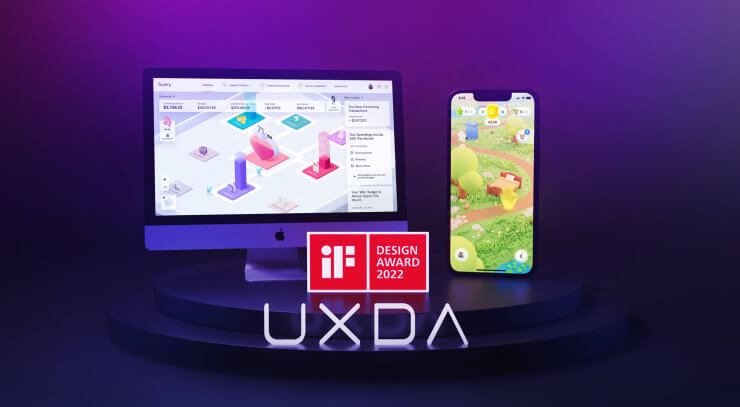
Spatial computing opens an entirely new canvas for financial interfaces. UXDA’s AI-powered Spatial Banking concept for Apple Vision Pro explores how banking could move from flat screens into an immersive environment built around financial needs. The experience combines movable glass interfaces, financial dashboards, contextual AI guidance and dimensional interactions, allowing users to explore cash flow, accounts, investments and transactions across their physical space. Motion, depth and spatial hierarchy become functional tools for directing attention and making complex financial information easier to explore.
Explore the Spatial Banking case study →
8. Retail Banking App UX/UI: Turning a Traditional Bank Into a Future-Focused Digital Brand
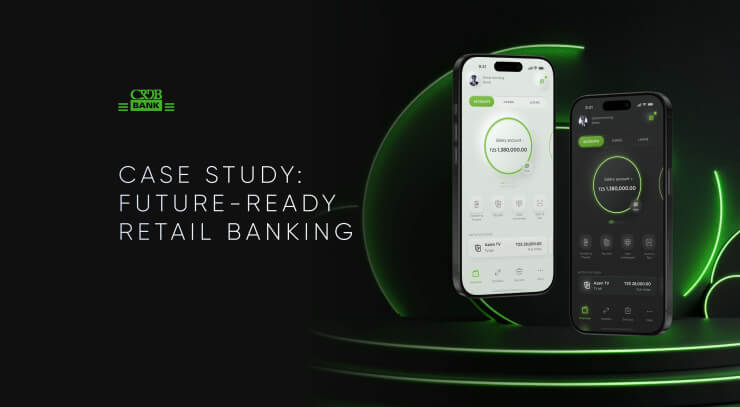
Retail banking modernization is not only about adding features—it also requires making everyday services easier to access and the digital experience more distinctive. CRDB’s redesigned SimBanking app combines simplified navigation and expanded self-service with a bold visual language built around motion, lighting and the brand’s recognizable energy-circle element. The interface demonstrates how users can navigate essential banking services, manage loans and interact with their finances through a lightweight experience that feels modern while remaining practical for local network conditions.
Explore the Retail Banking App case study →
9. Financial Super App UX/UI: Bringing Payments, Telecom and Lifestyle Together
A super app can quickly become overwhelming when dozens of unrelated services compete for attention. The my.t money experience brings financial, telecommunications and lifestyle services together while allowing users to personalize what matters most on their dashboard. The interface demonstrates how wallet information, payments, recharges, budgeting, rewards and partner services can coexist within one coherent system, with customizable shortcuts and playful interactions helping users reach frequent tasks quickly while still discovering the broader ecosystem.
Explore the Financial Super App case study →
10. Investment App UX/UI: Making Investing Accessible to First-Time Investors
Investment platforms often assume users already understand markets, terminology and financial data. GInvest by GCash takes the opposite approach, integrating investing into a familiar super-app environment and gradually guiding users through the experience. The interface demonstrates how personalized information, investment performance, market updates, educational content and guidance can be structured to reduce information overload while still supporting more experienced investors. This makes a traditionally complex financial activity feel approachable without removing the depth users need as their knowledge grows.
Explore the Investment App case study →
What Makes Effective Finance App UI Design?
1. Make the financial position understandable at a glance
Users should quickly understand balances, investments, spending or liabilities before being asked to act.
2. Prioritize decisions, not features
A financial dashboard should not expose everything the product can do simultaneously. UI hierarchy should reflect what matters in the current context.
3. Reduce complexity without hiding important information
Financial products require detail. Good UI organizes that complexity instead of simply removing it.
4. Use visual design to reinforce the financial brand
Color, typography, motion, illustration and component behavior should make the product recognizable rather than producing another generic banking interface.
5. Design the whole financial system consistently
Accounts, payments, investments and supporting services should feel like one experience even when their information structures differ.
Financial Service UI Should Look Like the Brand Behind It
Functionality across banking and fintech is increasingly converging. Accounts, transfers, cards, investing and financial insights are available across dozens of competing products.
This makes interface design part of a financial institution’s Digital Brand Identity. Typography, color, motion, information hierarchy, interaction patterns and even how financial information is explained influence whether the experience feels distinctive or interchangeable.
Effective finance UI therefore does more than make screens visually attractive. It translates the institution’s brand into a recognizable digital behavior customers experience every day.
Digital Brand Identity in Banking: How to Build a Distinctive Financial Brand >>
Finance App UI Design: Key Questions
What is finance app UI design?
Finance app UI design is the visual and interactive layer through which customers access financial information and services. It includes layout, typography, color, components, data visualization and interaction patterns across banking, fintech, investment and other financial products.
What makes a good financial app UI?
A strong financial UI makes complex information understandable, gives priority to the actions and data users need most, maintains consistency across journeys and reflects the financial brand without compromising clarity or trust.
How is banking app UI different from other app interfaces?
Banking interfaces must communicate sensitive financial information, support high-consequence decisions and accommodate complex products while maintaining security, accessibility and customer confidence. This places greater importance on hierarchy, clarity and predictable interaction patterns.
What should a financial dashboard show?
The answer depends on the product and user, but the dashboard should generally prioritize current financial position, relevant changes, important actions and contextual information that helps the user decide what to do next rather than displaying every available feature.
Get UXDA Research-Based White Paper "How to Win the Hearts of Digital Customers":

A stronger finance app UI starts with more than visual polish. It requires understanding how customers interpret financial information, which actions matter most and how the product should express the institution behind it.
UXDA partners with banks and financial companies to turn complex products into clear, distinctive digital experiences across mobile, web and connected financial ecosystems.
Request a Private Briefing:
- E-mail us at info@theuxda.com
- Chat with us in Whatsapp
- Send a direct message to UXDA's CEO Alex Kreger on Linkedin