



What should a banking app redesign actually change? These ten banking and fintech UX case studies examine more than a new interface. They show how UXDA approaches the problems behind the screen: difficult everyday tasks, fragmented services, overwhelming information and digital experiences that no longer reflect the financial brand.
For financial leaders, the question is not which interface to copy. It is which decisions could make their own digital experience more useful, more coherent and unmistakably theirs. Explore 10 before-and-after product transformation examples across mobile banking, investment platforms and banking software made by UXDA team.
UXDA's “Before-After” Financial App Design Transformations
In the past nine years, the UXDA team has completed over 150 digital financial app design transformations for Fintechs and banks in 39 countries. These transformations looks amazing, but please don't be fooled; what you're seeing is not a surface interface design revamp similar to what's offered by full-range digital agencies or freelancers. What you are seeing is a complete overhaul of the user experience, requiring a 100% competence focus on research, rethinking and innovation in financial services design.
A superficial UI revamp, while potentially improving the visual appeal of a financial app, is often not enough for several compelling reasons:
1. A good-looking app might initially attract users, but if the app is difficult to navigate or slow to respond, users will quickly become frustrated. UX encompasses much more than just aesthetics; it includes usability, accessibility, and the overall flow of interactions.
2. Modernizing the appearance of an app without addressing its information architecture can lead to user journey bottlenecks, usability issues, and scalability obstacles.
3. A mere UI update does not match the level of innovation required to compete effectively.
4. Today’s consumers expect intuitive, fast, and reliable digital experiences. A superficial UI revamp does not sufficiently address these expectations, and it does little to attract new customers in a market where user experience can be a significant differentiator.
5. Financial ecosystems are increasingly interconnected, and a surface UI revamp may not take into account the need for consistency between different channels, products, services and brand.
6. Superficial changes can lead to a fragmented UI design system and increased design debt, making the app more difficult and costly to maintain, update and scale over time.
7. While a rapid surface UI revamp can make an app more visually appealing, it falls short of addressing the strategic needs of modern digital banking, including user experience, performance, usability, scalability, and innovation.
Banking and Fintech UX Case Studies
A new interface is the visible part of a redesign. The more consequential changes concern how information is organized, how customers complete tasks and how the product expresses the brand. The following cases make those decisions visible.
1. Emirates NBD: Unifying Everyday Banking and Wealth Management
Emirates NBD, a leading middle eastern bank serving 17 million customers across 13 countries, embarked on a transformation journey to elevate its app into a cutting-edge digital service surpassing traditional retail banking. This ambitious vision involved consolidating various solutions, such as retail banking and deals, into a unified app. Additionally, the aim was to transform wealth management from an offline process to a fully online one by integrating it into the same app, all while catering to the unique needs and expectations of distinct customer segments.
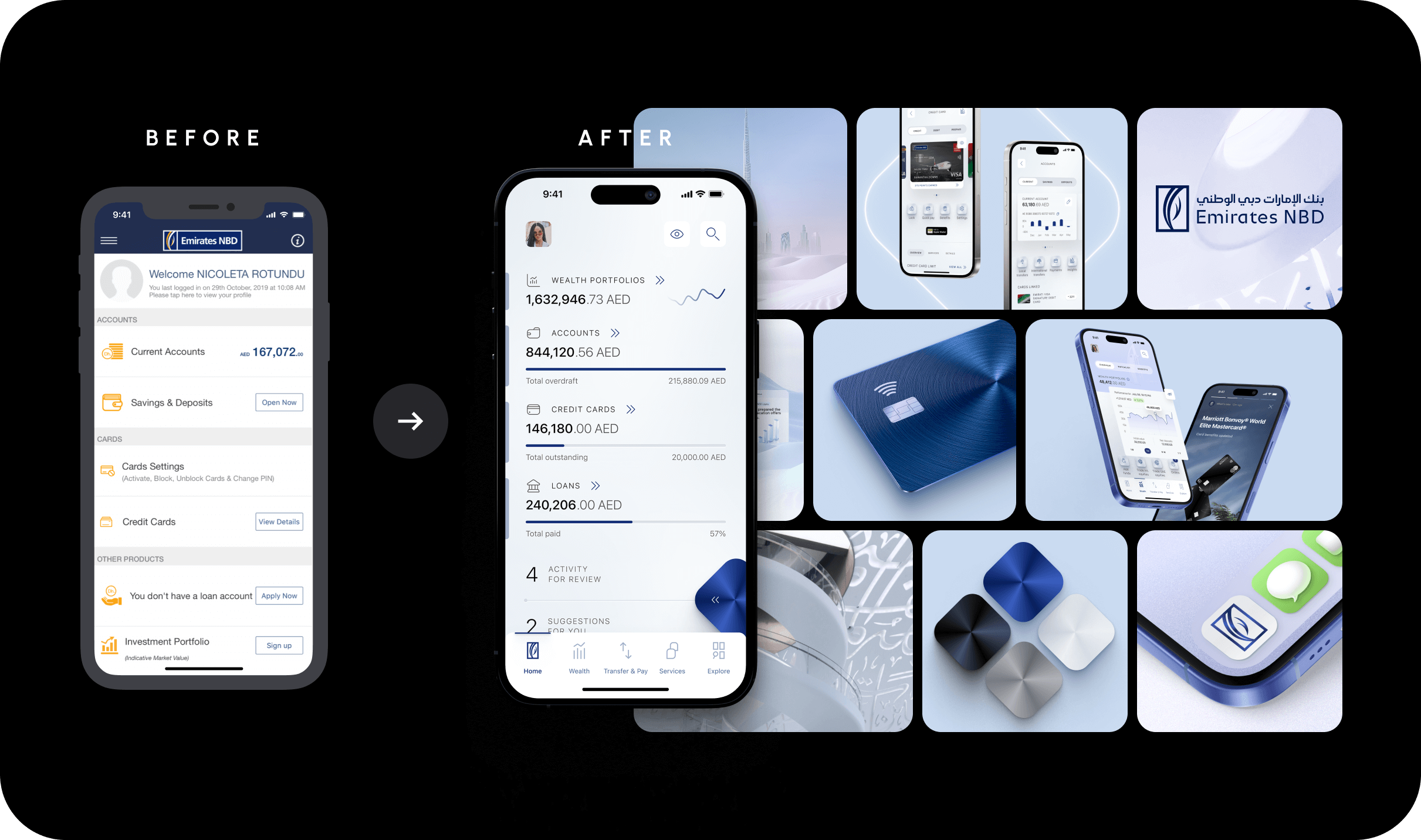
The challenge at hand was the creation of an enhanced digital user experience that not only fulfills user needs but also imparts a sense of individualized importance. Emirates NBD's ultimate aspiration was to establish their mobile app as the preferred choice for financial and investment management for retail and private banking customers in the region.
Read the Emirates NBD banking UX case study >>
2. Liv Bank: Building a Distinctive Lifestyle Banking Ecosystem
Liv Bank, Emirates NBD’s digital-only lifestyle bank in the UAE, partnered with UXDA to translate its “Liv Ahead” positioning into a distinctive digital ecosystem. The ambition extended beyond redesigning a mobile banking app: Liv X would combine financial services with lifestyle opportunities, Liv Lite would help children and teenagers develop money-management skills, and a spatial banking concept would explore immersive financial experiences. Each product needed to reflect its audience’s expectations while maintaining a recognizable connection to Liv’s brand.
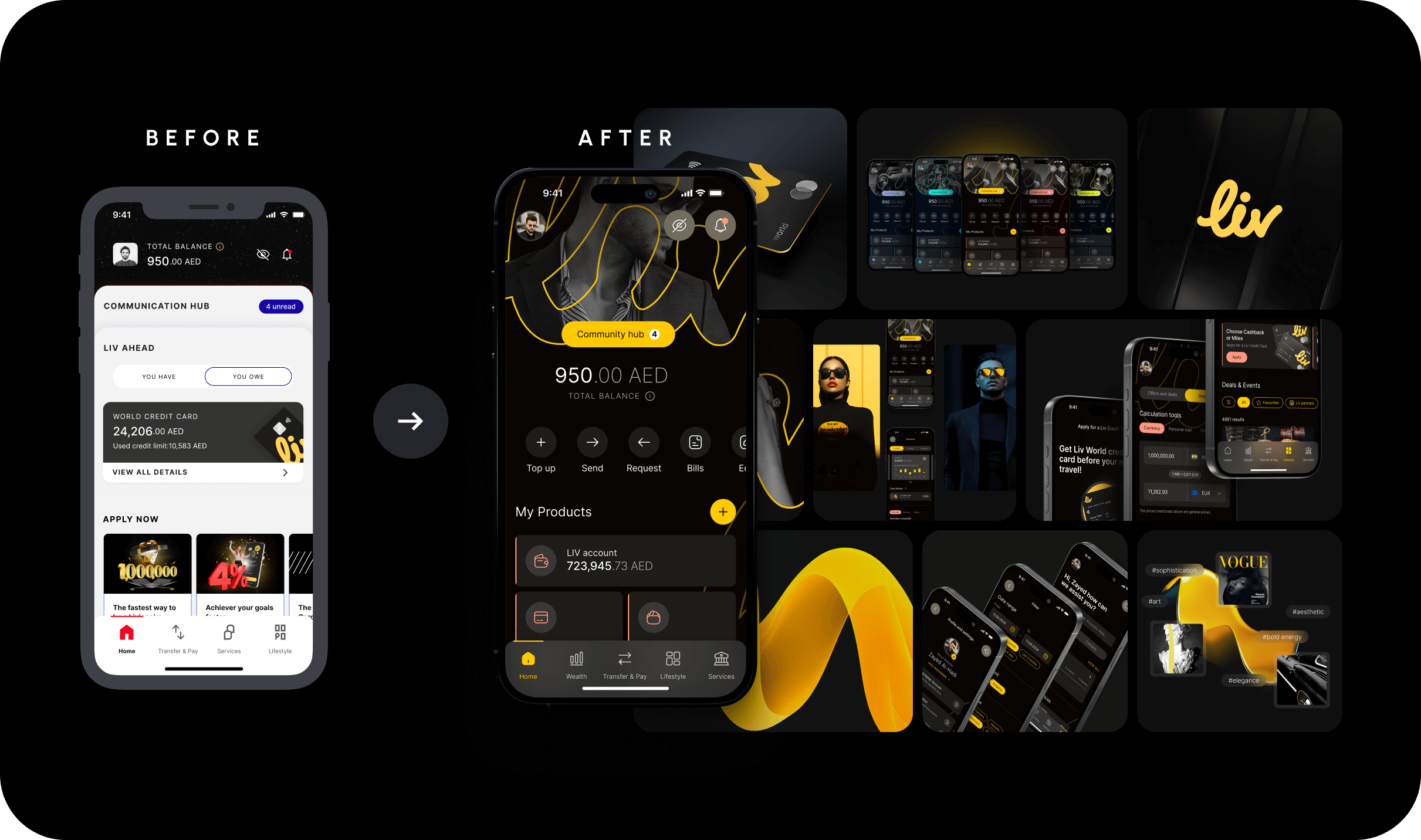
The central challenge was to bring these different experiences together without treating their users as one audience. UXDA balanced personalization for Millennials and Gen Z with age-appropriate experiences for younger users, while preserving consistency across the ecosystem. Liv’s aspiration was to become more than a transactional service: a relevant financial companion that could grow with customers, support their families and express the brand’s promise through everyday interactions.
Read the Liv Bank UX case study >>
3. Garanti BBVA Securities: Moving Beyond White-Label Investing
Garanti BBVA Securities, a Turkish brokerage within the Garanti BBVA group, set out to transform eTrader from a restrictive white-label solution into an investment experience shaped around its own brand and customers. The existing platform limited product innovation, offered inconsistent mobile and web experiences and primarily served experienced investors. Partnering with UXDA, the company sought to create a connected digital ecosystem that could welcome first-time investors without compromising the capabilities more experienced traders relied on.
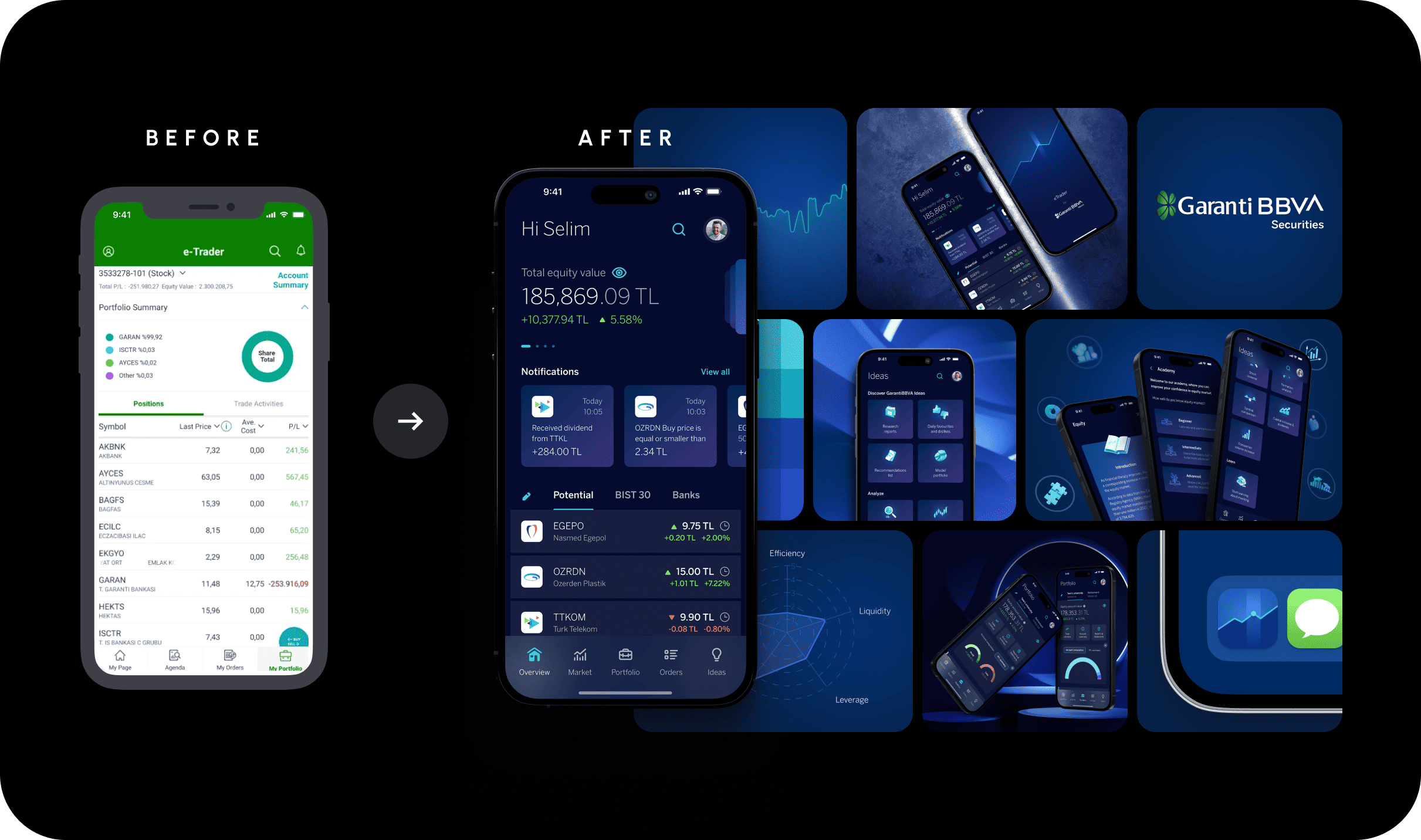
The challenge was to balance advanced investment tools with clear navigation while accommodating different investment habits and knowledge levels. UXDA restructured information, designed customizable dashboards and watchlists, and introduced educational experiences to support more informed decision-making. The ambition was to give Garanti BBVA Securities greater freedom to innovate and differentiate, turning eTrader into a personalized investment platform that combined the accessibility new investors needed with the analytical depth experienced users expected.
Read the Garanti BBVA Securities UX case study >>
4. Carson: Unifying Advisor Workflows Around Meaningful Client Relationships
Carson Group, a U.S. financial advisory company, partnered with UXDA to bring its fragmented advisor tools into one unified digital workspace. Advisors were spending time gathering information from disconnected systems instead of focusing on clients and growing their businesses. The ambition was to connect daily tasks, client workflows, business performance and relevant updates in a flexible platform that reflected Carson’s “Run, Grow, Love” philosophy and the different ways advisory firms operate.
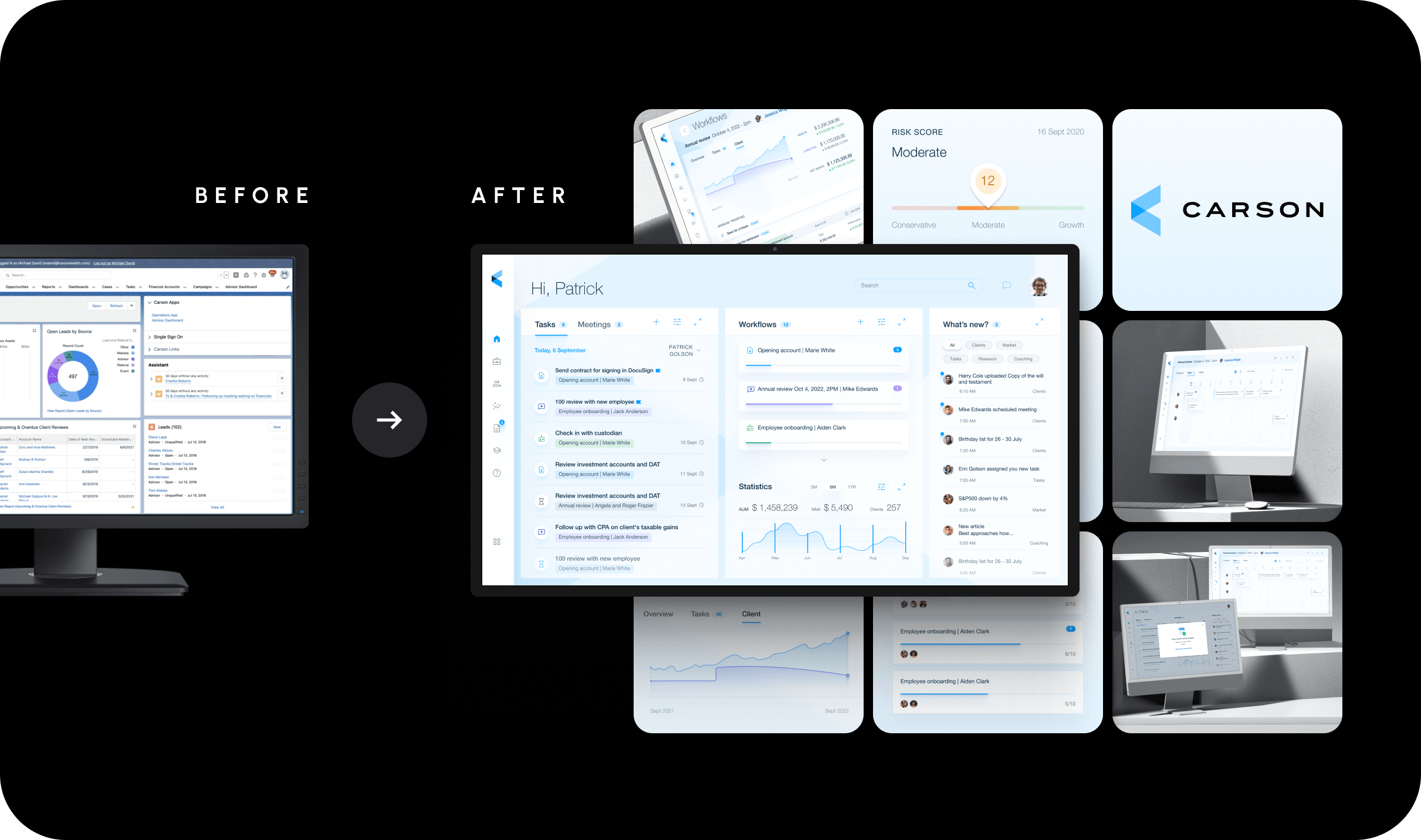
The challenge extended beyond consolidating technology: the experience had to support advisors, clients and operational teams while preserving the personal relationships at the heart of financial advice. Drawing on Carson’s research and collaborative usability testing, UXDA designed a dashboard and workflows around advisors’ priorities. The intended result was a working environment designed to reduce administrative distraction and give advisors more space to understand clients’ aspirations, provide personalized attention and build meaningful relationships.
Read the Carson platform UX case study >>
5. iGTB: Bringing Clarity to Global Transaction Banking
iGTB, the transaction banking business of Intellect Design Arena, partnered with UXDA to make its CBX platform easier to navigate and adapt across global banking environments. Corporate treasurers needed to manage cash, liquidity and payments across multiple accounts, currencies and legal entities, often through highly complex workflows. The ambition was to bring these activities into a coherent digital experience while allowing individual banks to configure the platform around their own products, processes and brand requirements.
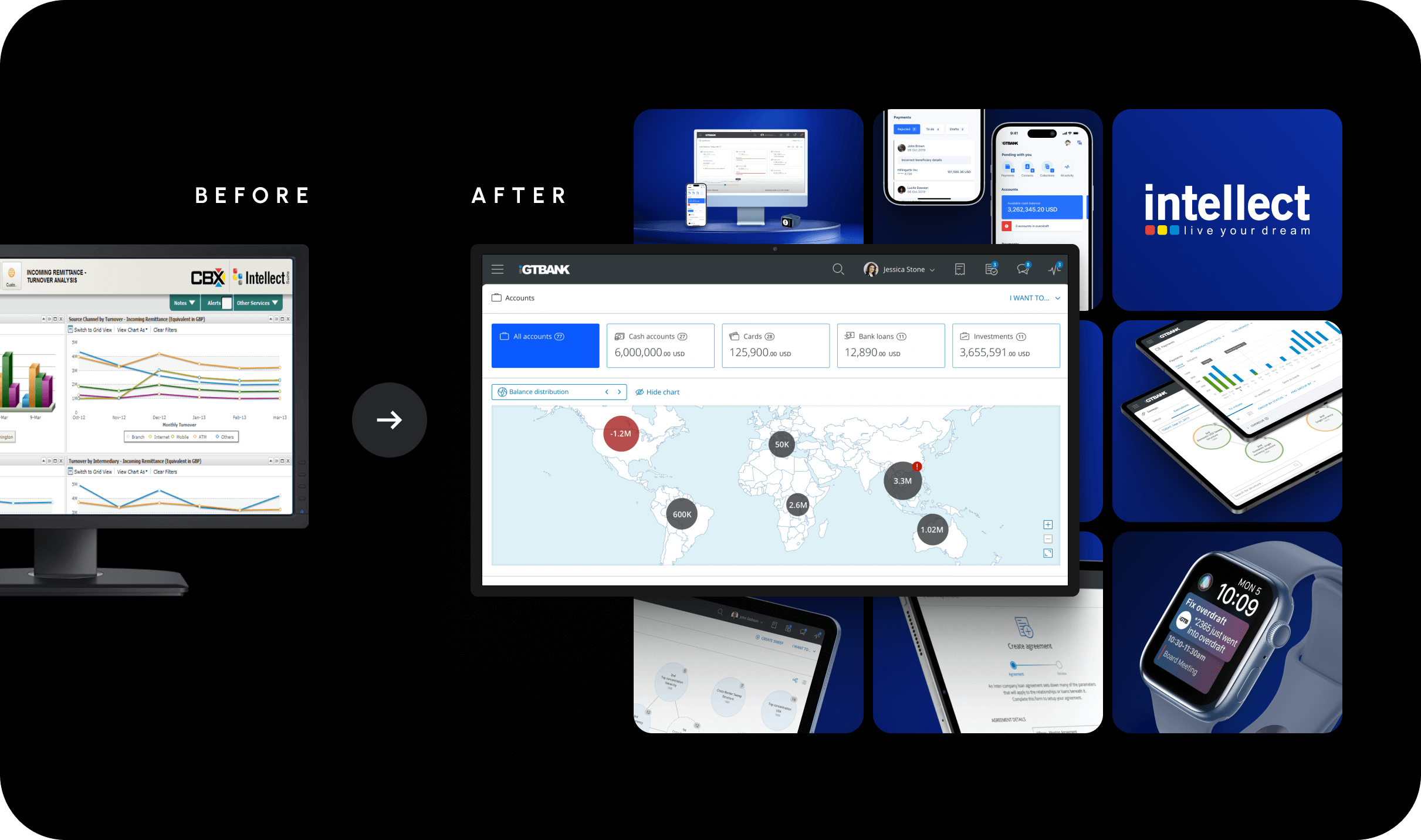
The central challenge was to simplify how treasury professionals understood and managed financial operations without removing the detail or control their work demanded. Across nearly 5,000 screens, UXDA helped shape a modular experience connecting capabilities such as cash concentration, sweeping, pooling and intercompany lending. The goal was to make sophisticated transaction banking more understandable and manageable for corporate users while giving banks a consistent foundation for customization and continued digital evolution.
Read the iGTB transaction banking UX case study >>
6. CRDB: Clarifying Navigation, Fees and Digital Self-Service
CRDB, a prominent bank in Tanzania, embarked on a transformative journey to revolutionize the banking experience in Tanzania through a modern app design. Striving for innovation, they partnered with us to overhaul their digital strategy, introduce novel features to meet evolving customer needs and stay ahead in the competitive financial landscape.
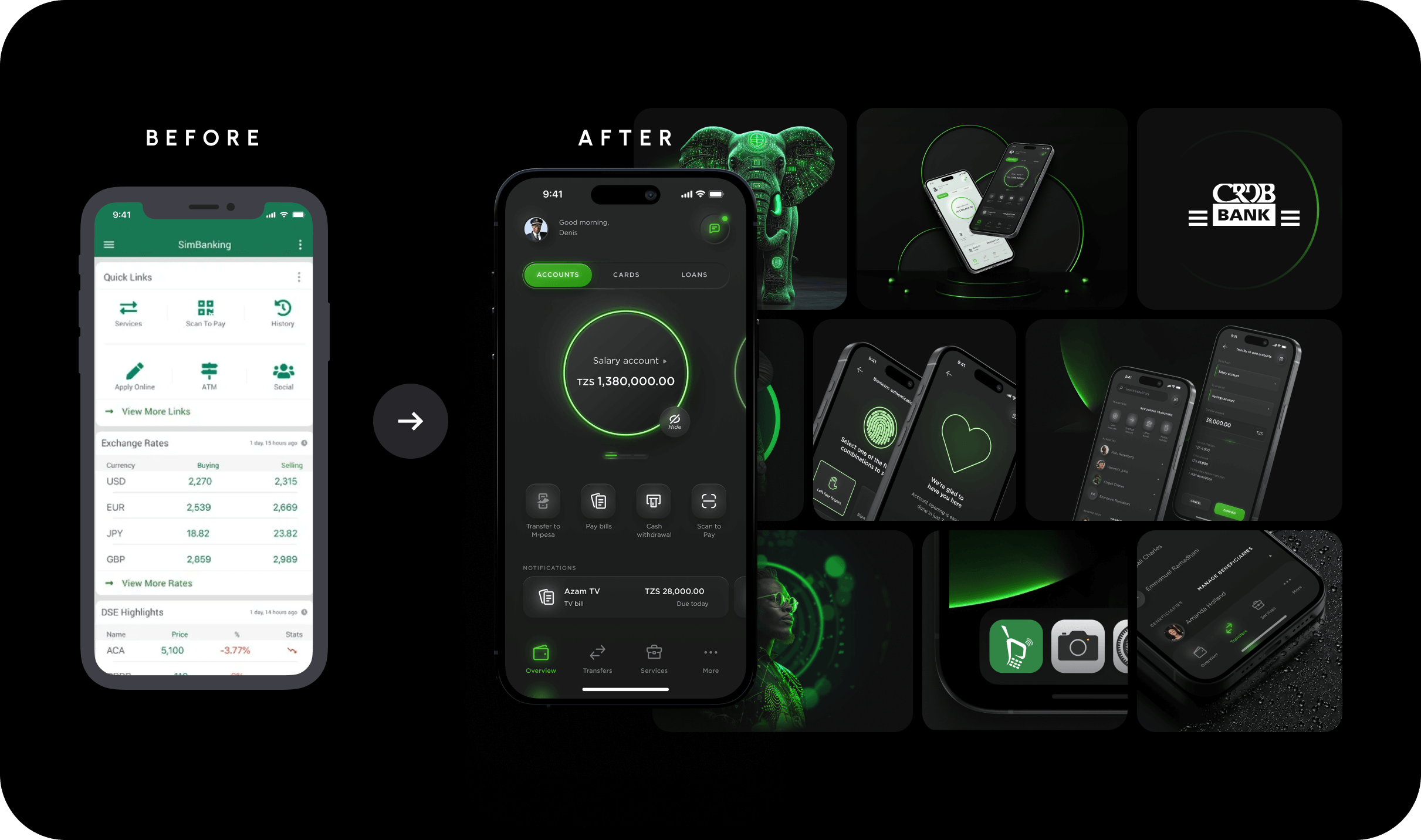
The reimagined digital strategy empowered CRDB to serve its customers more effectively, offering a user experience that was not only modern but also highly engaging. The revamped app marked a significant leap in CRDB's digital journey, catering to the evolving needs of Tanzanian users and reshaping their perception of banking.
Explore the CRDB Bank UX case study >>
7. my.t money: Bringing Payments, Telecom and Lifestyle Into One Experience
Mauritius Telecom (MT), the top telecom company in Mauritius, aimed to shape a digital future for Mauritians. Their focus was on expanding the existing my.t money app into a digital bank, establishing a pioneering financial Super App. Their my.t money app, launched in 2019, had already revolutionized payments with digital P2P and QR code transactions. Through collaboration with UXDA, they created an integrated platform merging finance, telecom and lifestyle services.
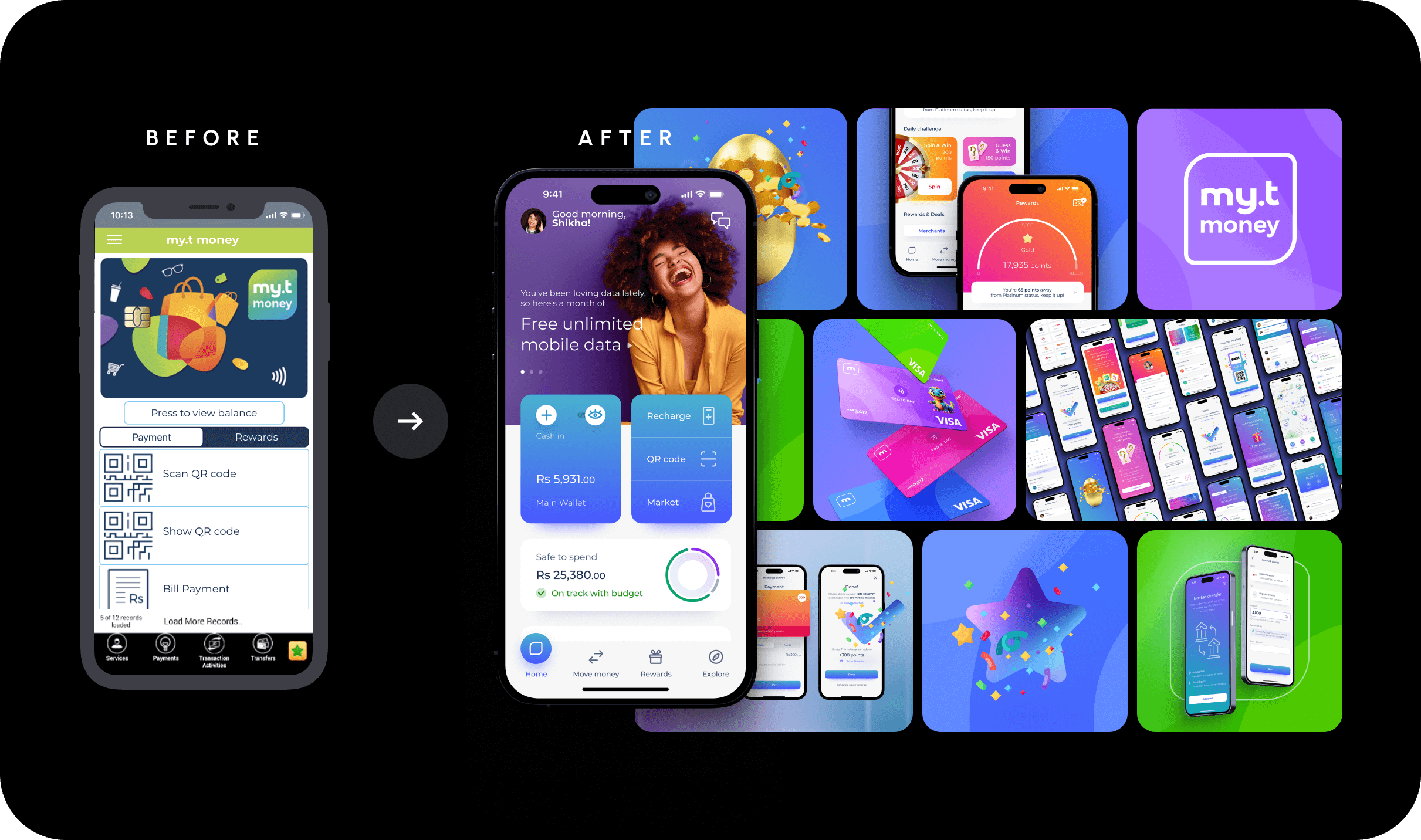
With a customer-centric vision, MT aimed to enhance convenience and advancement for Mauritius' 1.3 million inhabitants.
Read more in the my.t money UX case study >>
8. BKT: Connecting Transactions, Budgeting and Digital Self-Service
Banka Kombëtare Tregtare (BKT), Albania's largest and oldest commercial bank, recognized the need to modernize their digital offerings to meet current service expectations.
UXDA's challenge was to overhaul mobile banking's customer service by redesigning user journeys in alignment with BKT's user needs. The aim was to create an inviting and reliable digital banking companion, empowering users to enhance their financial decisions and money management, ultimately enhancing their quality of life.
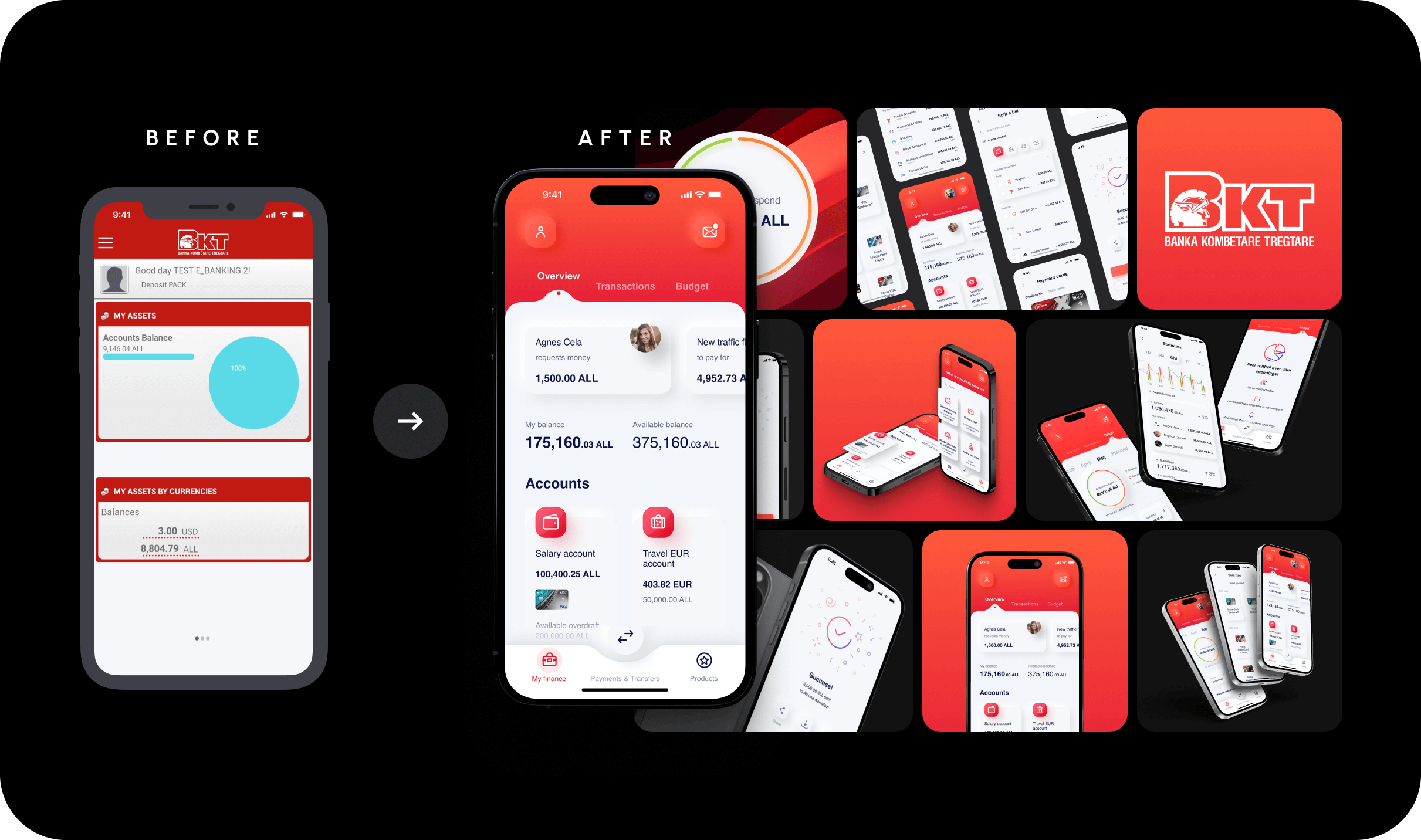
These mobile banking enhancements not only transformed BKT's perception of the brand from a digital perspective but also solidified their market leadership. They defied conventional notions of digital banking by offering a light, enjoyable and user-friendly experience. BKT's comprehensive transformation focused on providing users with convenient, innovative mobile customer service, empowering them to seamlessly manage their financial tasks and marking a significant leap in the bank's legacy.
Read more in the BKT UX case study >>
9. Bank of Jordan: Rebuilding Mobile Banking Around Everyday Tasks
Bank of Jordan, a well-known and respected middle eastern bank, had a goal to enhance and digitalize the user experience in the mobile app. The Bank of Jordan's app offered a wide array of features that unintentionally created more complexity for users to perform basic tasks. The challenge was to remove the complexity and create a convenient and powerful mobile app in which users can perform as many operations as possible on the go, eliminating the need to go to the branch.
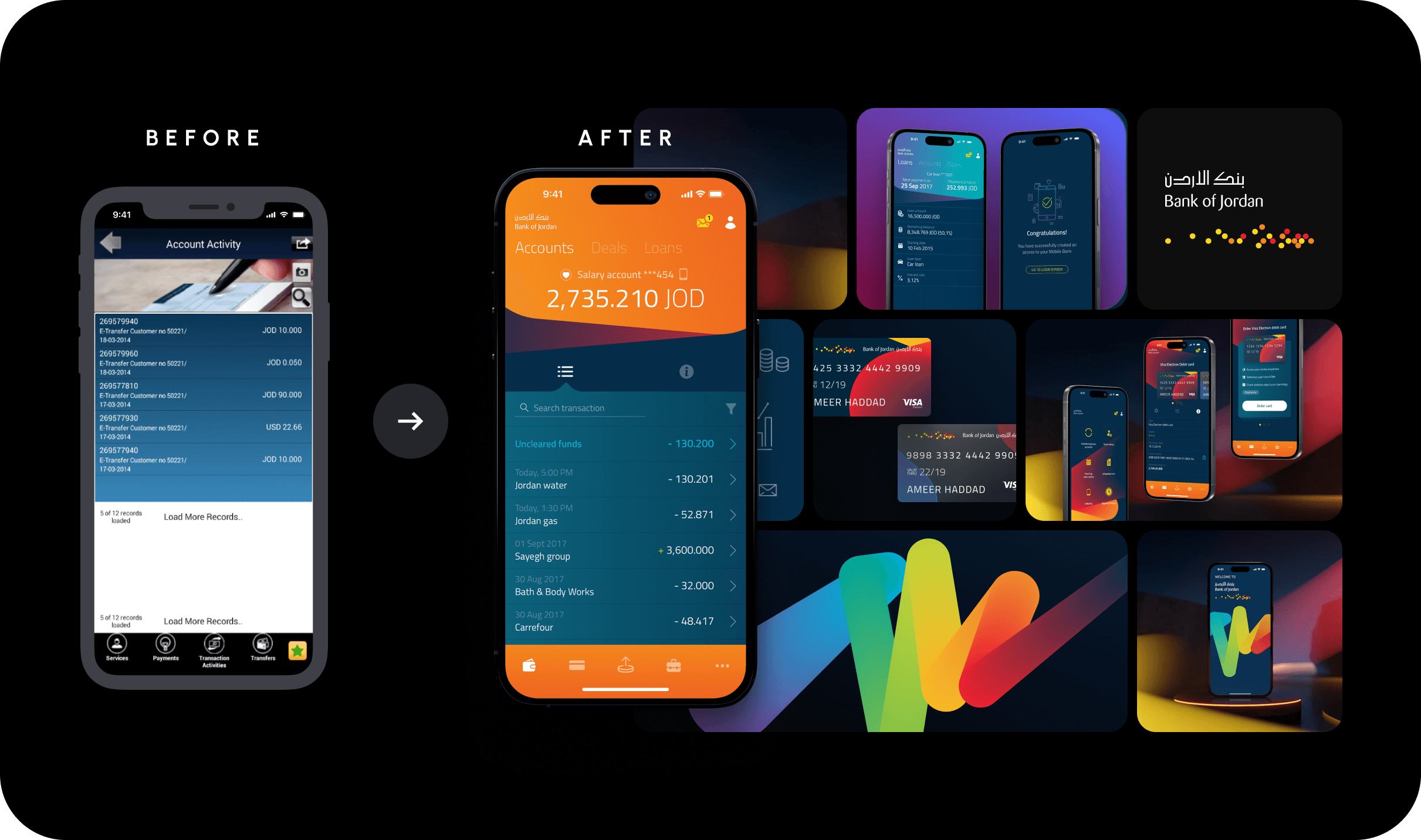
They updated their mobile banking app design with a remarkable transformation in just six months, soaring from a 2.8 to a 4.7-star rating on Google Play, leading to enhanced accessibility and convenience for millions of users in the middle east.
Read more in the Bank of Jordan UX case study >>
10. Private Wealth Systems: Making Complex Portfolios Easier to Navigate
Private Wealth Systems, a provider of advanced investment reporting and analytics for affluent families and financial advisors, initiated a profound revamp of the product and their platform's user experience. Their challenge revolved around aligning their platform with the expectations of their high-net-worth clientele.
The existing user interface and experience fell short in delivering the sophistication and service quality that their customers demanded. PWS sought to revamp their investment reporting and analytics platform, aiming to create a more intuitive, visually appealing and functionally efficient system that resonated with their users' high expectations.
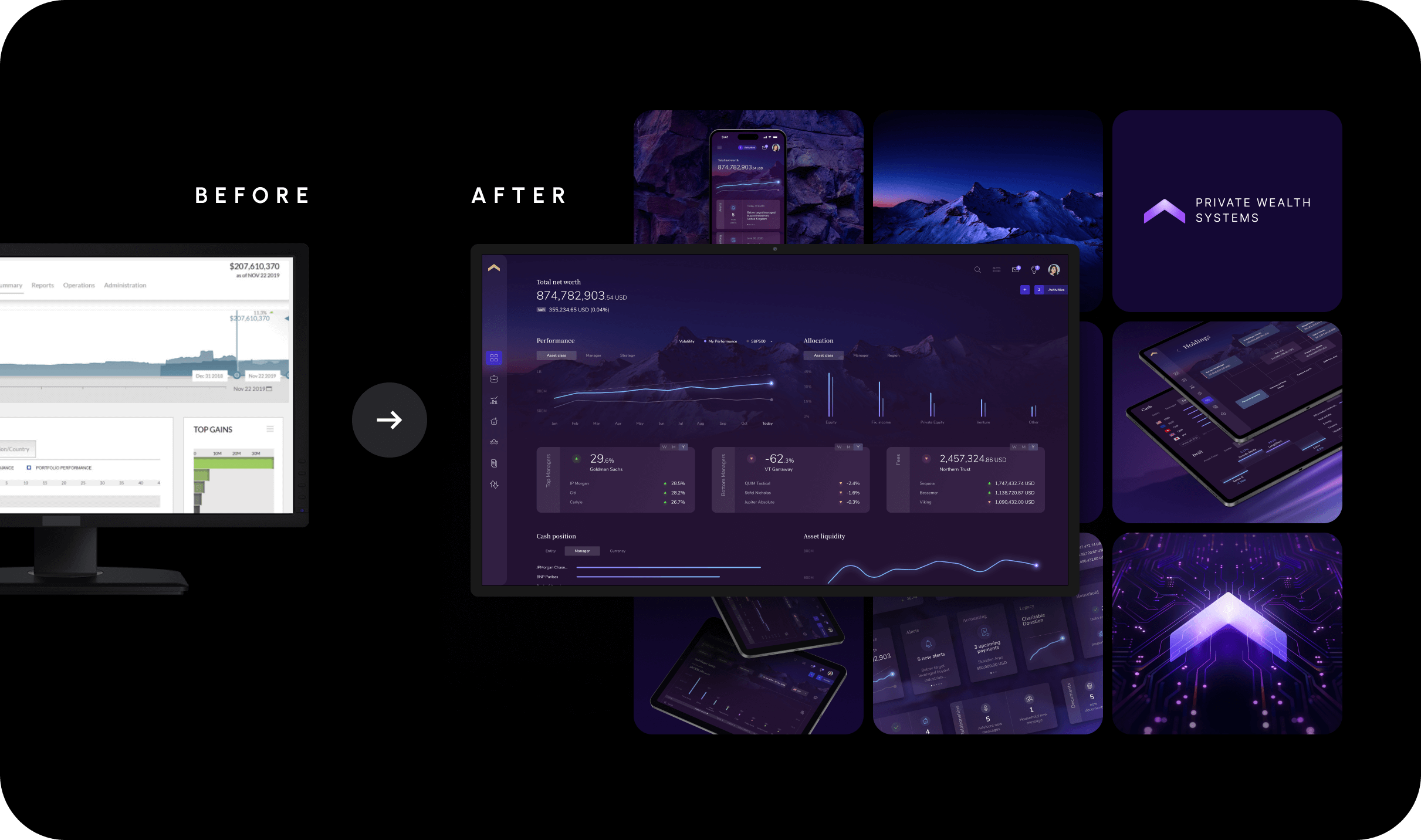
Private Wealth Systems is a unique gem in the industry that smooths friction and makes managing complex wealth delightful. This is a one-of-a-kind wealth management system that is a must-have for any ultra high-net-worth individual. This transformation has redefined how affluent individuals and their financial advisors interact with investment data, elevating the platform to an essential tool for ultra high-net-worth individuals seeking sophisticated wealth management solutions.
Read the Private Wealth Systems case study >>
+ bonus
United Arab Bank: Making Digital Banking Reflect the Brand Promise
United Arab Bank (UAB), one of the leading financial solutions providers in the UAE, aimed to align their mobile banking experience with their commitment to exceptional customer service. Despite offering tailored financial services, UAB's existing mobile app didn't fully embody their values. They sought to enhance their digital offerings and reduce the need for physical branch visits.
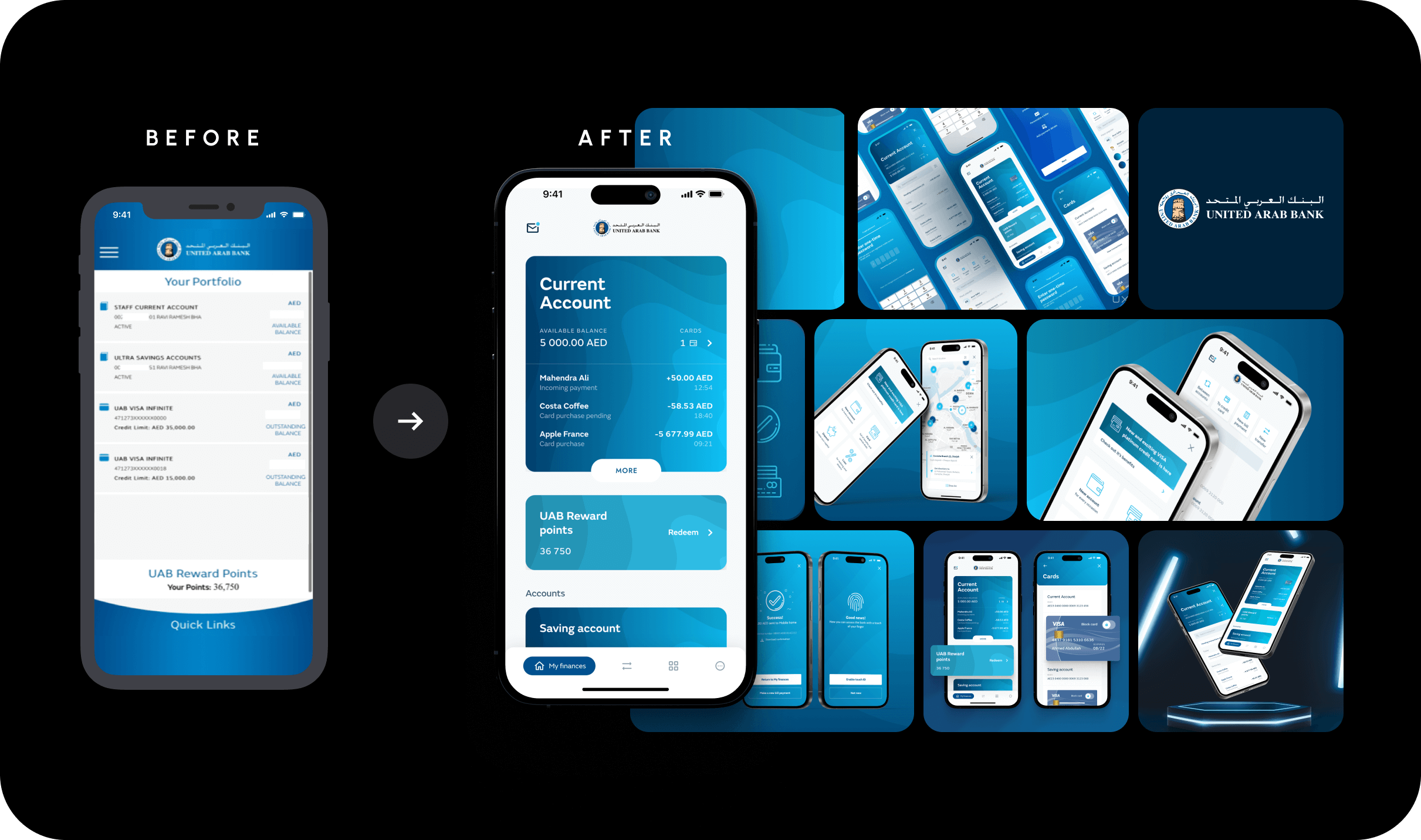
UXDA's task was to transform UAB's mobile banking into an intuitive, engaging platform that motivated users to shift from branch visits to app usage. The goal was to foster relevance, simplicity and contextual information presentation, aligning with UAB's mission to provide superior digital banking in the UAE.
Read more in the United Arab Bank UX case study >>
Magma: Bringing Hedge Fund Onboarding and Investment Oversight Online
Magma Capital Funds aimed to revamp the investment experience for digital-savvy users. They sought a user-friendly, luxurious digital solution to attract and empower new-gen high-net-worth investors, offering control, sophistication and convenience.
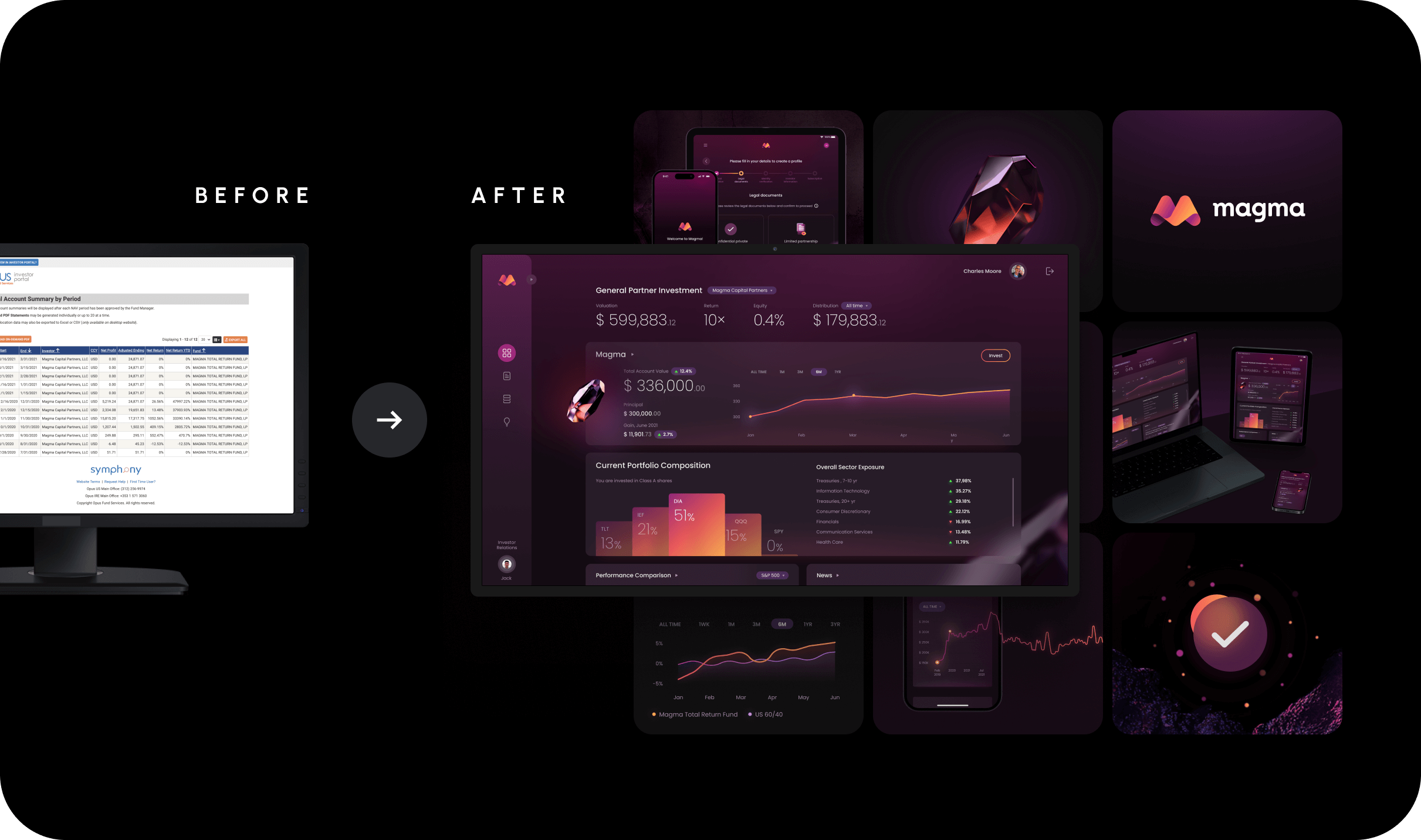
Their goal was to overcome HNWI obstacles, replacing paper-based procedures with seamless digital onboarding, enabling remote investment management. By eliminating transparency issues and undisclosed strategies, they aimed to redefine hedge fund relationships.
Read more in this Magma UX case study >>
ITTI: Rethinking Core Banking Workflows for Employees
ITTI Digital, a banking software vendor, underwent a profound transformation by collaborating with UXDA to migrate a 15-year-old core banking solution to the Cloud. This shift led to remarkable improvements in banking service speed, employee productivity and customer satisfaction.
Learning curves for banking employees are reduced from months to hours, lowering the risk of human error. The Cloud-based system also expanded ITTI Digital's global market reach. Consequently, the core banking system received the prestigious IF Design Award after just a few months following their visual product release.
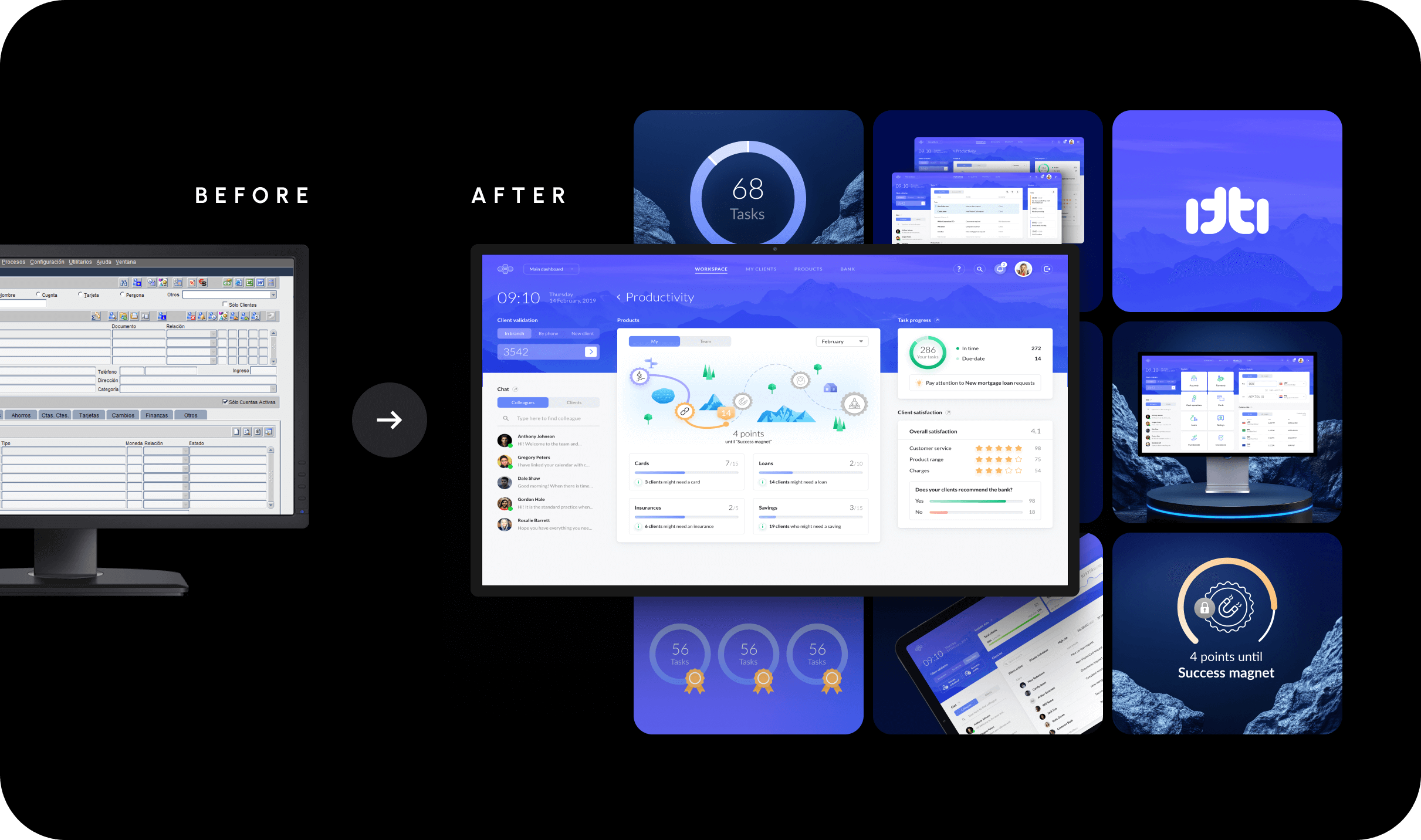
Throughout the project, ITTI Digital's perspective changed significantly as they prioritized users and their needs. They embraced user feedback and empathized with their struggles, resulting in a more user-centric approach. Sixty-five percent of the previous platform's functionality was removed due to being unnecessary, and entirely new functionality was added based on the user needs that they uncovered.
Read more in this ITTI UX case study >>
CR2: Designing a Consistent White-Label Banking Ecosystem
CR2 is a global leader in the Digital Banking Platform market, particularly renowned for its dominance in Africa. It offers various digital channel solutions, encompassing mobile, internet, SMS, USSD, payments, card management systems, ATM and kiosk. Recognizing the need to enhance cross-channel customer experiences, CR2 undertook a mission to establish a unified UX/UI design system and digital strategy for their white label ecosystem.
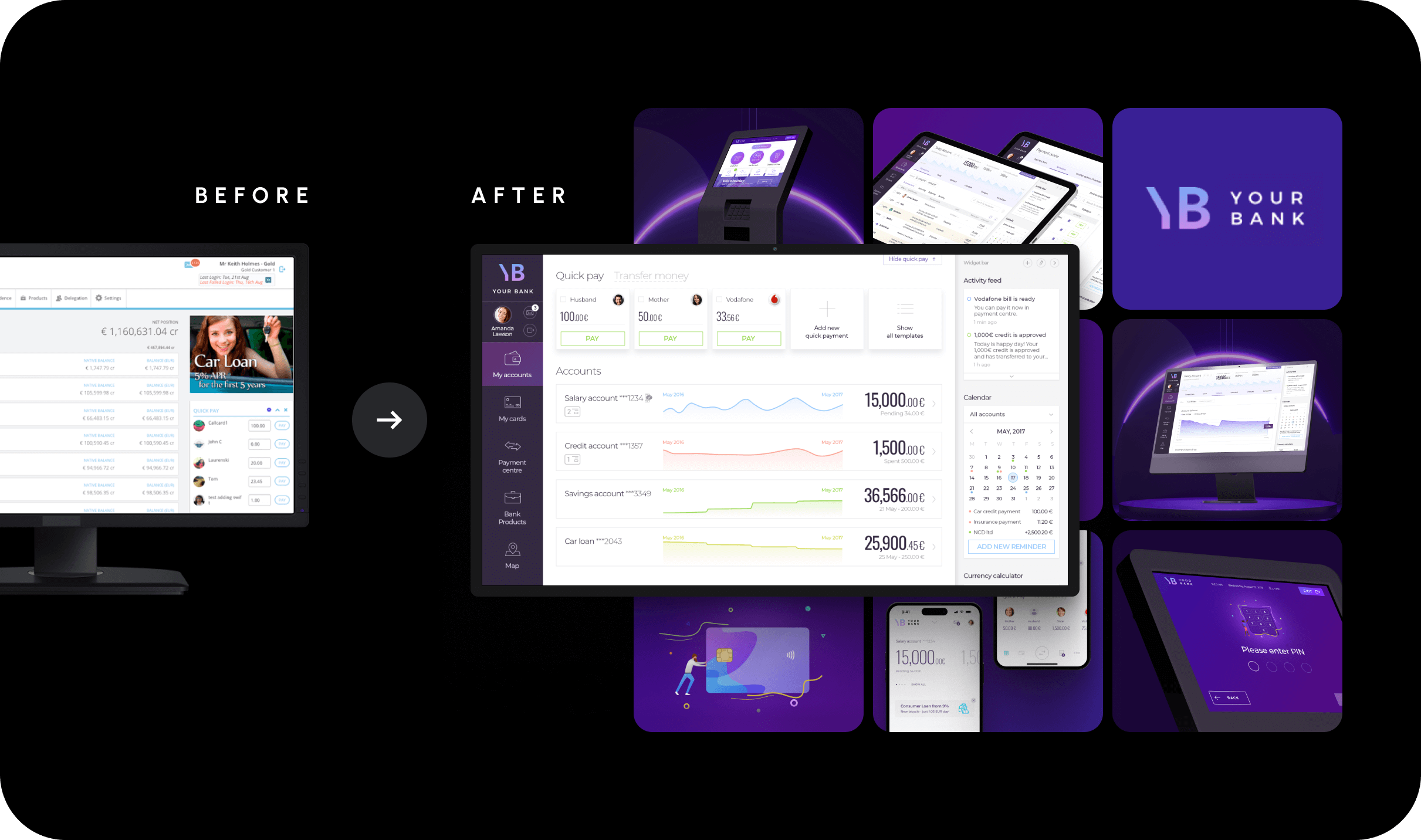
As a result, CR2 has crafted a harmonious white-label ecosystem, including desktop, tablet, mobile and ATM, empowering financial institution departments to collaborate seamlessly, ensuring uninterrupted customer experiences across different channels. This commitment solidifies CR2's position as a pioneer in shaping comprehensive financial solutions.
What Financial Leaders Can Learn From These Redesigns
Do not copy the screen. Understand the decision.
A financial app redesign should begin with a clear account of what customers cannot accomplish easily today. The resulting interface should make the solution visible—not conceal the same problems beneath a new visual style.
Evaluate a redesign at three levels: whether priority journeys become clearer, whether related services work together coherently and whether the experience expresses something distinctive about the financial brand.
For your own organization, the useful question is not “Which of these apps looks best?” It is “Which of these problems do we recognize—and what would it take to solve them properly?”
Following is a list outlining the key points to successfully transform a financial app through a customer-centric design and user experience (UX):
UX Audit
Conduct thorough user and product research to detect usability issues, pain points and improvement opportunities. This informs the design process and ensures that the app caters to real user requirements.
More: Shift Perspective to Improve Financial Products with a UX Audit >>
Design-Driven Strategy
Align the app's strategy with design principles. Prioritize design decisions that enhance user satisfaction, engagement and ease of use.
More: Banking Innovation Only Thrives in Design-Mature Financial Organizations >>
Design Ops
Implement Design Operations (DesignOps) practices to streamline and optimize design processes, fostering collaboration among teams and ensuring consistency across your digital ecosystem.
More: Implementing DesignOps in Banks and FIs >>
Multi-Value Approach
Consider financial market development and your customers’ key values in your product design. Tailor the product's design to cater to a diverse range of user needs and goals.
More: Financial UX Design Methodology: the Value Pyramid >>
Human-Centricity
Keep the human at the center of your business strategy and all design decisions. Make your business purpose-driven to bring good to the community and align with customers’ expectations.
More: How Purpose-Driven Banking and Fintech Create Next-Gen Products >>
Customer Perspective
Continuously view the app through the lens of the customer. Regularly seek user feedback and insights to refine and enhance the app's design based on user context.
More: Don't Let Financial Experience Fail Ignoring the Problem-Solution Cycle >>
Customer-Centric Culture
Cultivate a company culture that combines value and design to encourage collaboration among design, development and business teams. Customer-centricity should be integral to the overall company culture.
More: The UX Matrix: Grow a Customer-Centric Banking Culture >>
Key Scenarios
Identify critical user scenarios, such as onboarding, transactions, customer support, etc. Streamline these interactions to minimize friction and provide a seamless experience.
More: Fintech UI Design: 20 Tips to Improve Mobile Banking Usability >>
Design Thinking
Apply design thinking methodologies to creatively solve user problems. Empathize with users, define their needs, ideate solutions and prototype and iterate based on feedback.
More: How To Implement Design Thinking In Banking >>
Experience Gap
Identify areas in which the user experience might be disjointed or inconsistent. Smooth out these gaps to ensure a cohesive and coherent journey for users by detecting and resolving blind points in your business.
More: Customer Experience Gap Model: Blindspots That Ruin Digital Banking >>
Launch Strategy
An excellent app design doesn't guarantee success without a strong launch strategy. Continuously monitor user behavior, gather feedback and make improvements based on data and insights.
More: A Poorly Executed Launch Could Sink Even a Perfect Financial Product >>
Remember, a successful financial app design transformation requires a holistic approach that combines design expertise, user insights and a commitment to delivering an exceptional customer experience.
Banking and Fintech UX Case Studies: Key Questions
What should a banking or fintech UX case study explain?
A useful financial UX case study should connect the original customer and business problem to research insights, design decisions and available evidence. Before-and-after screens provide context, but the explanation should show why the experience changed and distinguish measured outcomes from intended benefits.
What should change in a banking app redesign besides its appearance?
Evaluate whether the redesign addresses information architecture, priority journeys, navigation, content and the relationship between services. The visual design should support those decisions and reflect the financial brand—not become a substitute for resolving the underlying experience problems.
How can a bank use these examples without copying another brand?
Use the cases to identify comparable problems and examine how the teams approached them. Then evaluate your own customers, operating constraints and brand strategy. The useful reference is the decision-making process, not another institution’s colors, layout or interaction pattern.
How should financial institutions assess redesign results?
Define measures against the original problem. Depending on the project, these may include task completion, abandonment, digital self-service, support demand, adoption or customer satisfaction. Record the baseline and measurement period, and distinguish the redesign’s contribution from other changes occurring at the same time.
Get UXDA Research-Based White Paper "How to Win the Hearts of Digital Customers":
Your next redesign should start with the decisions your current experience is getting wrong—not with a new set of screens. Whether the challenge is fragmented journeys, difficult self-service or a digital experience that no longer reflects your brand, define what needs to change before deciding how it should look.
Discuss your digital experience ambitions with UXDA:
- E-mail us at info@theuxda.com
- Chat with us in Whatsapp
- Send a direct message to UXDA's CEO Alex Kreger on Linkedin